51 Electoral Votes Could Tip National Popular Vote Compact Over 270
Five states moving toward full Democratic control may push the interstate agreement past the threshold needed to bypass the Electoral College.
By Connor Murphy ·
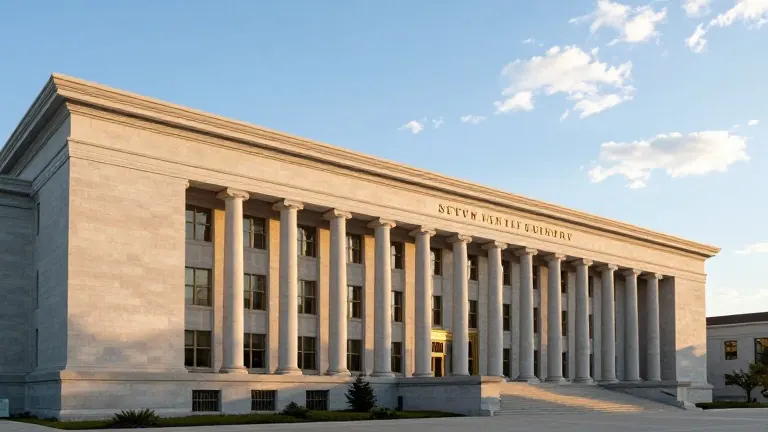
The National Popular Vote Interstate Compact is poised to reach the 270-electoral-vote threshold required to activate a national popular vote for president. This milestone depends on the actions of five states that will fall under full Democratic control following the 2026 midterm elections.
The five states in question are Arizona, Pennsylvania, Michigan, Nevada, and Wisconsin. Together, they hold 61 electoral votes. The compact currently includes 18 other states and the District of Columbia, which account for 222 electoral votes. If at least four of the five newly controlled states sign the agreement, the total will exceed the constitutional majority of 270.
Patrick Rosenstiel, a senior consultant to the National Popular Vote organization, expressed high confidence in the timeline. "I've never been more confident that 63% of American voters can get what they want in the 2028 presidential election, which is a national popular vote for president," Rosenstiel told NPR, citing Pew Research Center polling data.
Leaders in the five states have not all committed to joining the compact. Governors in Pennsylvania and Nevada have indicated they are open to signing the legislation. However, Democratic Arizona Governor Katie Hobbs, who previously supported the measure, has not recently commented on whether her state will join. Her office did not respond to a request for comment from NPR before the report was published. The governors of Michigan and Wisconsin have yet to publicly weigh in.
Legal experts and political leaders cite several hurdles. Some constitutional scholars argue the compact may conflict with the compact clause in the Constitution, which generally requires congressional consent for agreements between states. Norman Miller, a constitutional law professor at Willamette University, noted practical concerns about decentralization. "We would want to have a standardized, uniform set of rules regarding who gets to vote for president, how they vote, how those votes are tabulated, and to have a federal election authority doing that tabulation," Miller said. He added that nationalizing the system could create discord.
John Koza, chairman of the National Popular Vote, countered that existing state and federal laws already provide for certified vote counts. "The simple fact is current state and federal law provide for the issuance of a certified vote count from each state. And all that has to be done is add them up," Koza told NPR. He argued that a centralized bureaucracy is unnecessary.
The compact faces opposition from groups like Save Our States, which argue the reform would exacerbate regional divides. A previous effort to pass a constitutional amendment to eliminate the Electoral College failed in 1969. The next steps for the compact depend on whether the newly elected state legislatures in Arizona, Pennsylvania, Michigan, Nevada, and Wisconsin pass and enact the legislation.
More Politics · Albuquerque news · Report a business · Got a Story?