Homeowners seek fair wildfire insurance costs
Experts and residents question whether current rates reflect the cost of hardening homes against fire.
By Paula Delgado ·
Alexi Horowitz-Ghazi reported on the economics of home insurance in wildfire zones in a two-part Planet Money series. The reporting examines how insurers price risk and whether homeowners receive adequate discounts for making their properties safer.
Researchers at a lab in South Carolina use mock houses to test disaster resistance. They subject structures to fire, hail, and hurricane-force winds. Major insurance companies fund these tests to determine which building designs limit damage and reduce potential payouts.
The practice has a long history. Underwriters Laboratories tested electrical wiring and appliances in the early 20th century to prevent fires. The Insurance Institute for Highway Safety uses similar crash tests to influence car safety standards.
Economists identify a problem known as moral hazard. When insurers cover losses, homeowners may have less incentive to invest in preventive upgrades. Installing a metal roof or ember-resistant vents costs money. If a policy covers a total loss, the financial argument for those upgrades weakens.
Neighborhoods face a collective action problem. One home may be hardened, but if neighboring structures remain vulnerable, the risk of fire spreading stays high. Insurers attempt to counter this by offering bill discounts for safety improvements.
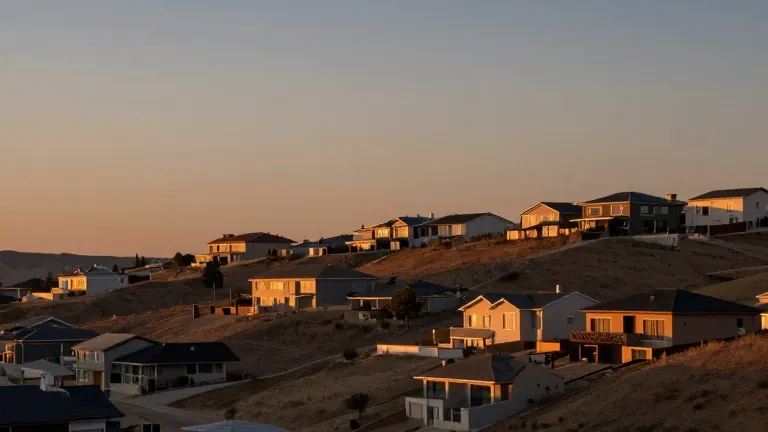
Residents in Paradise, California, have invested heavily in community safety measures. Local homeowners told Horowitz-Ghazi that the resulting insurance discounts are small. They question whether these rates accurately reflect the reduced risk their investments provide.
Nancy Wallace, a UC Berkeley economist, cited California insurance regulations as a factor in the current market conditions. Proposition 103, passed by voters in 1988, requires state approval for rate increases. Insurers must base rates on historical wildfire losses rather than forward-looking catastrophe models.
Wallace said this system kept premiums artificially low. It encouraged development in fire-prone areas. As losses mounted, insurers pulled out of the market. Wallace told the Planet Money newsletter that regulators destroyed the markets.
Judson Boomhower, an economist at UC San Diego, discussed the future of insurability. He said the market will find ways to insure risky areas. He noted that higher prices are a sign the market has healed.
California adopted rules in late 2024 that allow insurers to use forward-looking models. In exchange for using these models, insurers must write more policies in high-risk areas. The goal is to make coverage easier to find.
Some homeowners have moved to the non-admitted market. These insurers have more freedom to set prices and shape policies. However, homeowners in this sector lack protection from a state-mandated backstop if an insurer fails.
The FAIR Plan serves as California's insurer of last resort. Many families were forced onto this plan when other insurers declined to renew policies in fire-prone areas. A new policy in the non-admitted market may offer better coverage but carries higher financial risk for the homeowner.
More News · Albuquerque news · Report a business · Got a Story?