New Mexico researchers face funding gap for lab inventions
State and federal funds often stop before prototypes are built, leaving scientists to bridge the distance to the marketplace.
By Scott Marshall ·
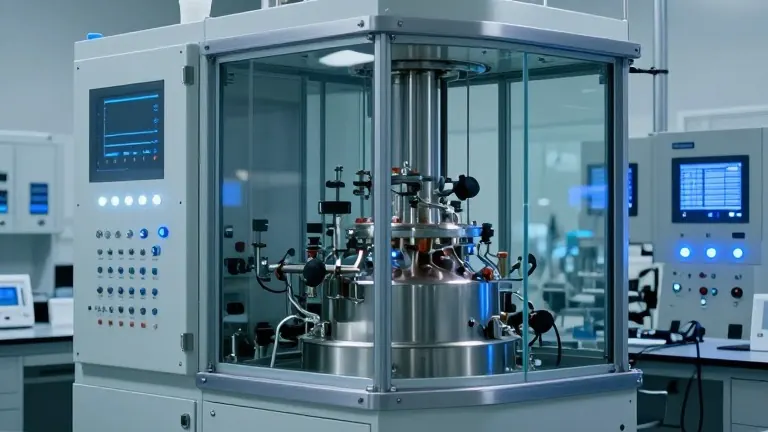
New Mexico scientists are struggling to find money to turn laboratory discoveries into market-ready products.
Federal grants typically cover early-stage research, but they rarely pay for the expensive prototyping phase required to attract private investors.
Lisa Kuuttila, CEO of UNM’s technology transfer office Rainforest Innovations, describes this financial void as the valley of death.
Agencies such as the National Institutes of Health and the National Science Foundation decline to fund projects that are too advanced, while startups hesitate to back technologies that are too early, Kuuttila said.
UNM addresses this issue through the Wellborn Gap Fund, which allocates $100,000 annually to four or five faculty projects.
Each recipient receives roughly $25,000 to build prototypes or gather data necessary for patent applications.
Ganesh Balakrishnan, a professor in UNM’s electrical and computer engineering department, is one of this year’s awardees.
Balakrishnan’s lab grows quantum dots in molecular-beam epitaxy reactors located in the Center for High Technology Materials.
His team is developing these dots to emit infrared light for use in sensors and fiber-optic networks.
Building these structures requires precise control over atomic layers on crystalline wafers.
Balakrishnan compared the growth process to fitting Lego blocks, noting that mismatched sizes cause distortions.
A company has expressed interest in licensing his work, but he needed the gap funding to transition the research from a specific federal task to a commercial product, he said. The lab prepares reactors for hours before each test, and growing a quantum dot takes about 30 seconds, Balakrishnan said. This year’s other UNM recipients include Steven Graves in chemical and biological engineering, Aaron Neumann in medicine, and Wenbin Wan in mechanical engineering. Wan is using the funds to create energy-efficient machine-learning algorithms for drones. Since 2007, the Wellborn Gap Fund has supported 63 projects. Twenty-six of those have been optioned or licensed by startups, including Sandia Medical Technologies and YEEO Eco-Safe, Kuuttila reported. The fund receives 20 to 25 applications each year, forcing the selection committee to choose projects where the money will make a tangible difference, she said. The problem extends beyond UNM to other institutions in the state. Lique Coolen, vice president of research at the New Mexico Institute of Mining and Technology in Socorro, noted that the university holds more than 50 active patents and patent applications. However, these technologies often have a low technology readiness level, a metric developed by NASA in the 1970s that gauges how close a technology is to implementation. Federal and state funding agencies generally do not focus on advancing this specific stage of development, Coolen said. The state’s national laboratories face similar constraints. Mary Monson, senior manager of technology partnerships at Sandia National Labs, explained that the lab focuses on pathfinding technology development rather than manufacturing or scaling. Sandia uses royalties from licensed technologies to fund internal maturation programs, supporting four to five projects per year from a pool of 20 to 30 applicants, Monson said. The state government has attempted to close this gap through the TRGR initiative, a tax credit for startups collaborating with national labs. This program allows Sandia and Los Alamos National Laboratory to claim up to $1 million annually in tax relief to offset the cost of assisting New Mexico businesses. Each participating business can receive up to $150,000 in support for prototyping and proof-of-concept demonstrations. The TRGR program expires at the end of 2026, and the state Legislature will decide whether to renew, expand, or discontinue it. Monson said nearly 20 New Mexico companies are currently waiting in the queue for TRGR projects. Sandia reached 100 collaborative research and development agreements in 2026, surpassing its previous record of 84 set in 1994. This increase reflects a surge in private sector interest in deep tech startups that rely on fundamental scientific breakthroughs.
More Tech · Albuquerque news · Report a business · Got a Story?