New Mexico screwworm cases reach 41 as state warms
A new manual from New Mexico State University aims to educate residents on the parasitic fly that threatens livestock and pets.
By Scott Marshall ·
New Mexico has confirmed 41 cases of the New World screwworm, a parasitic fly that was eradicated from the United States more than 50 years ago. The pest returned to Texas earlier this year before spreading to Arizona and New Mexico.
Caleb Hubbard, an assistant professor of entomology, plant pathology, and weed science at New Mexico State University, recently published a manual to help residents understand the threat. Hubbard said he created the guide after realizing many people did not know how much damage the fly could cause.
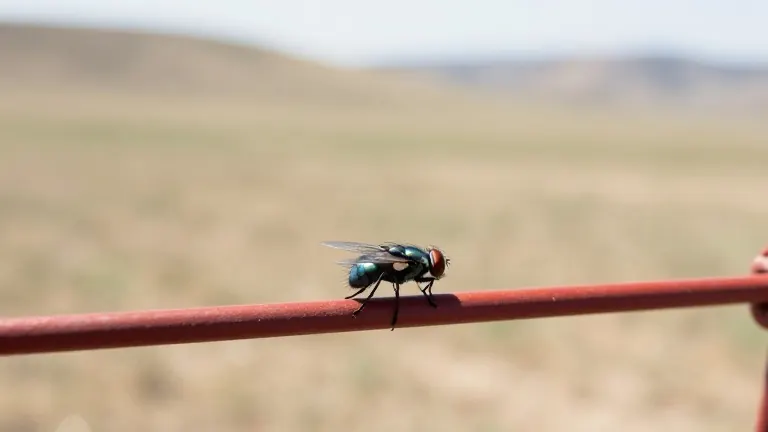
The manual includes photographs of real infections to show the severity of the parasite. Hubbard explained that the blue-green metallic fly is about the size of a housefly but can cause fatal lesions in cattle, wildlife, and pets. He hopes the guide will serve as a resource that people can easily share with friends or family who own animals.
Local climate conditions are complicating efforts to control the outbreak. Parasites like the screwworm typically die off in New Mexico winters, but the state has seen warmer temperatures in recent years. Hubbard noted that if this winter mirrors the previous one, cases may drop in the northern part of the state but could continue to rise in the south.
Federal agencies are releasing sterile male flies to disrupt reproduction and reduce populations. However, Hubbard cautioned that production rates have not kept up with the demand. Because New Mexico is receiving the majority of the sterile flies to address its massive outbreak, Texas is receiving fewer, which may contribute to additional cases there.
The U.S. Department of Agriculture estimates that a large-scale infestation in New Mexico could cost cattle producers at least $130 million. The statewide economic impact could exceed $300 million if the outbreak continues to spread.
Hubbard emphasized that while colder temperatures are a natural defense, residents should not rely solely on the weather to end the threat. The manual provides additional resources for those looking to learn more about prevention and identification.
More News · Albuquerque news · Report a business · Got a Story?