Study links locked phone pouches to small test score gains in Bernalillo schools
Researchers analyzed data from 844 schools and found that banning phones during the school day added one to two weeks of learning annually.
By Paula Delgado ·
A new study released Tuesday found that locking students' cell phones in pouches during the school day is associated with modest gains in reading and math scores.
The research was conducted by teams from Harvard University, Dartmouth College, and NWEA. The study analyzed student-level test scores from more than three million elementary, middle, and high school students over five school years.
Tom Kane, a co-author from Harvard, stated that U.S. students began losing two to three weeks of learning each year around 2013. He noted that this decline has left eighth graders nearly a year behind historical benchmarks. According to Kane, strict cellphone bans appear to plug about half of that learning leak.
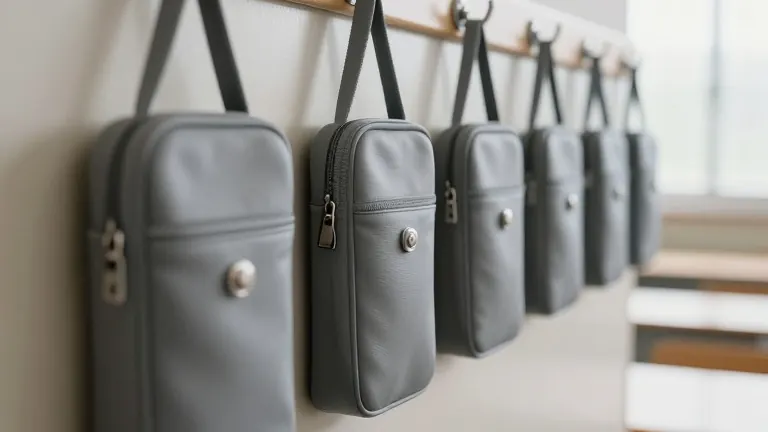
The study focused on 844 schools that use both Yondr lockable pouches and tests administered by NWEA. More than 3,300 schools nationwide began using these pouches between the 2019-20 and 2025-26 school years. Students in these schools place their phones in the pouches at the start of the day and retrieve them at the end using a magnetic device operated by a staff member.
The researchers found that the learning gains did not fade after the first year of implementation. Instead, the improvements continued for at least three years after schools adopted the policy. Douglas Staiger, a co-author from Dartmouth, said the gains could add up over time just as the initial declines did.
An earlier study from April by Brian Jacob and colleagues at the University of Michigan found close to zero impact on test scores. That research pooled school-level mean scores rather than using student-level data. Jacob noted that his team found gains in high school math but learning losses in middle school that offset those results.
Tom Dee, a professor at Stanford University's Graduate School of Education, called the early results largely disappointing. He said he is not comfortable extrapolating from small estimates based on a few years of phone bans. Both studies acknowledge the need for continued research on the topic.
Kane argued that the pouches make financial sense for schools because they cost roughly $25 per student. He compared that expense to the cost of hiring teachers for an extra week of instruction.
More News · Albuquerque news · Report a business · Got a Story?