Supreme Court authorizes $46 billion border wall project in Big Bend
The high court paused a Texas judge's order to halt construction, allowing the Trump administration to proceed with building barriers in the region.
By Scott Marshall ·
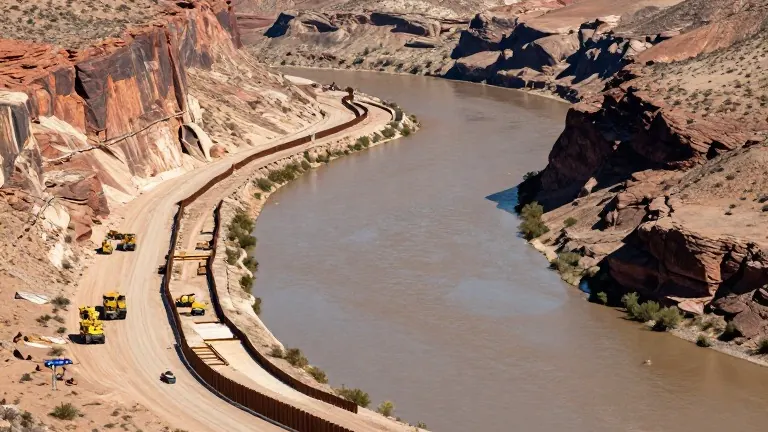
The Supreme Court ruled on Monday that the Trump administration may resume construction of border barriers in the Big Bend region of Texas. The decision pauses a lower court order that had immediately stopped all construction-related activity in the area.
Congress allocated $46 billion to fund the project last summer. Customs and Border Protection has been installing 12 miles of border barriers per week across the entire U.S. border. In the specific Big Bend section, the planned construction includes 30-foot-tall steel walls, vehicle barriers, and new roads.
A federal judge in Texas previously sided with opponents of the project. She found that Congress likely did not clearly authorize the government to issue sweeping waivers to bypass environmental regulations. The judge noted that the area historically has the lowest rate of migrant apprehensions along the southern border. Her order covered land within Big Bend National Park as well as state and private lands located up and down the river.
Federal attorneys argued that the administration needed to move quickly. They stated that illegal border crossings and drug seizures occur in Big Bend. They also argued that a gap in the wall could funnel more traffic to the area. The Supreme Court majority agreed that the law sharply limits judicial intervention when the federal government deems speedy barrier construction necessary.
Justice Ketanji Brown Jackson wrote a dissenting opinion. The Center for Biological Diversity filed the original lawsuit against the construction. They were joined by the Friends of the Ruidosa Church and a local river guide in the Big Bend area.
Laiken Jordahl, a national public lands advocate for the Center for Biological Diversity, stated that this is the first time the government has waived a broad set of environmental laws inside a national park. She described the ruling as allowing contractors to destroy the area before the courts decide if the destruction is legal.
Republican Senator John Cornyn of Texas also opposed the project. He published an op-ed in the San Antonio Express-News on Monday arguing against the construction.
More News · Albuquerque news · Report a business · Got a Story?