UK and EU face final hour negotiations over food rules and student fees
UK and EU negotiators face a final push to resolve disputes over food regulations and student tuition fees ahead of a critical summit in Brussels.
By News Media House Staff ·
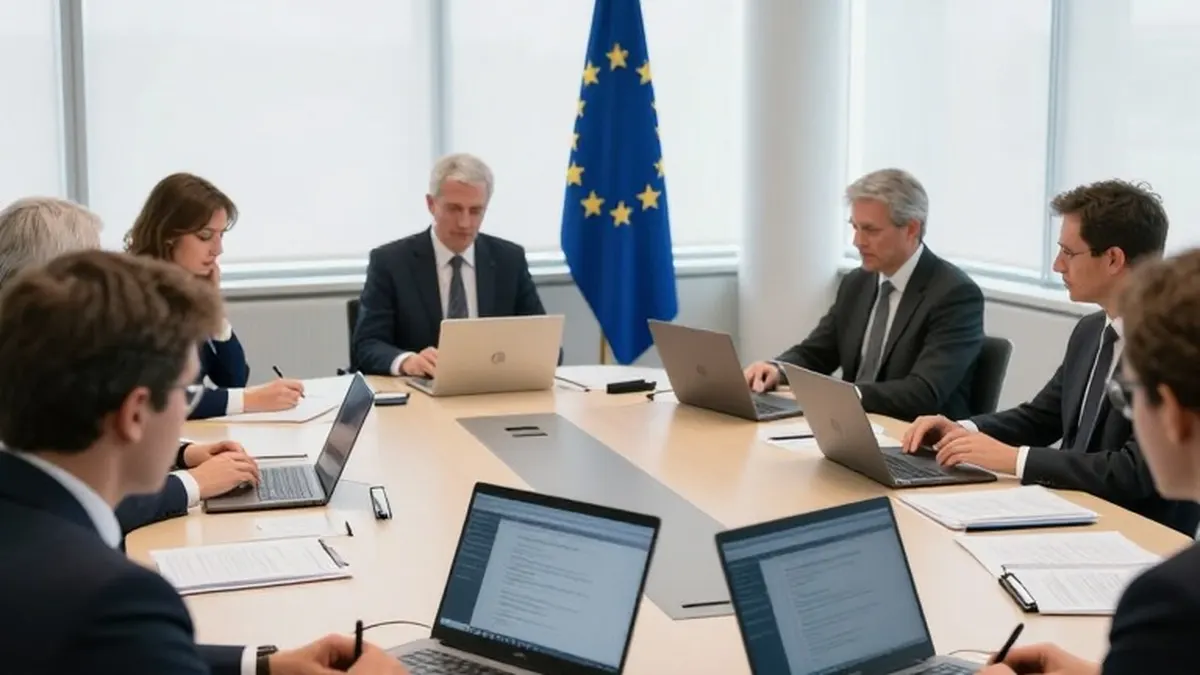
Negotiations between the United Kingdom and the European Union to reset their relationship are expected to continue until the final moments before a major summit. With less than 24 hours remaining until British leader Andy Burnham arrives in Brussels, officials from both sides are working to resolve significant disagreements. The primary points of contention involve the extent of Britain's influence over future European food and farming regulations, as well as the financial terms for EU students studying in the UK.
An EU diplomat described the situation as going down to the wire, noting that the British side would need to make concessions if a deal was to be finalized. A spokesperson for the British prime minister echoed this sentiment, stating that the talks were close. They indicated that if an agreement was reached, the government would introduce the cutting costs bill to parliament the following week.
Ambassadors representing EU member states are scheduled to meet at 5pm to work through the remaining issues. One source indicated that the meeting would continue until an agreement was reached that evening. The discussions center on a highly anticipated food and drink deal, which was a key commitment in the Labour manifesto. This agreement is projected to add 0.4 percent to British GDP and is expected to take effect on March 1, 2028.
A central issue in the talks is the status of the UK under new sanitary and phytosanitary standards. The proposed deal requires Britain to align with EU rules, effectively making the UK a rule taker rather than a rule maker. The British government has argued that its election manifesto promised closer ties with Europe and a reset of the relationship. However, UK representatives have pushed for a formal role in EU committees that implement and set these new standards.
EU officials have maintained a firm position on this matter. One diplomat stated that the UK wanting to shape future decisions, not just the implementation of current ones, has always been a red line for the EU. Under the current proposal, the UK would dynamically align with EU laws and have a voice, but would not be present in the room when laws are drafted. A second diplomat suggested that the European Commission has offered a restrictive consultation mechanism, while another argued that it is reasonable for a British representative to participate in the implementation phase.
The debate over rule taker status highlights the broader tension in the relationship. This issue would become even more significant if Britain were to pursue entry into the single market as a non-EU member state. Currently, the precise details of how the UK will be consulted on future food and farming rules remain unclear, with both sides still negotiating the mechanics of this process.
Beyond food standards, the two sides remain deadlocked on tuition fees for EU students under a new youth mobility scheme. The UK has been resisting pressure to agree to the same fee structures as domestic students. A draft proposal offers the UK two options: either significantly reduced undergraduate fees or equal treatment with British nationals. The overall number of participants in the scheme is also under discussion.
Separately, the UK has prioritized securing commitments regarding its position in relation to the EU's Made in Europe legislation. This trade defense policy includes tariffs on Chinese electric vehicles and will impact British manufacturing. While the sides are believed to be close on language pointing toward UK inclusion, nothing can be formalized until the EU passes its own legislation.
A spokesperson for Burnham suggested that there is a consensus that no further incremental reset summits will occur before a full negotiation on a longer-term relationship begins, such as rejoining the single market. The spokesperson stated that after the summit, discussions would begin on realistic options for a more stable partnership, emphasizing that shared economic challenges are best met with a collective approach that benefits both Britain and Europe.
Originally published by News Media House