11 Killed in Sinaloa Firefight as Cartel Leader Captured
Mexican forces detained Fausto Isidro Meza Flores after a violent standoff in Guasave left seven gunmen and four soldiers dead.
By Scott Marshall ·
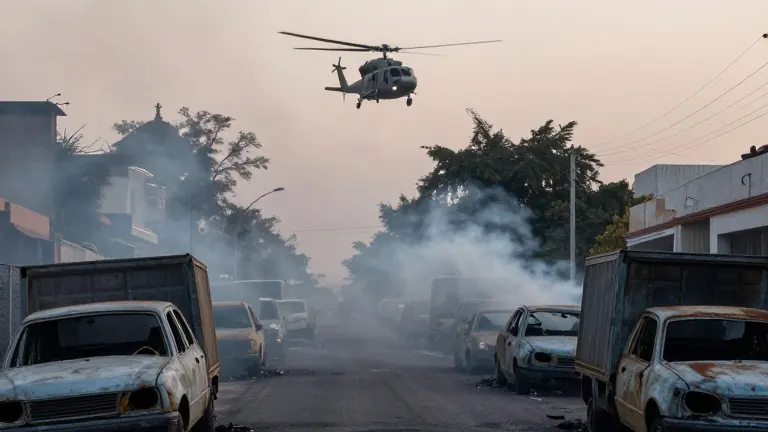
Residents of Guasave in northern Mexico faced a weekend of intense gunfire and military presence after authorities captured cartel leader Fausto Isidro Meza Flores. The operation, which began late Friday and continued into Saturday, resulted in the deaths of at least 11 people, including seven alleged cartel gunmen and four Mexican soldiers. Meza Flores, known as “El Chapo Isidro,” was one of the FBI’s 10 most wanted fugitives and led the Meza-Flores Transnational Criminal Organization.
The confrontation started around 7 p.m. on Friday, according to residents of the 290,000-person municipality. Military helicopters and drones flew overhead as forces established a security perimeter around a building where Meza Flores was located. When suspected cartel operatives attacked with guns and explosives, armed forces entered a home and detained him. The Defense Ministry stated that intelligence from the U.S. government aided the capture, though specific details of the coordination were not disclosed.
Local journalist and Guasave resident Alma Camacho described the chaos as the fighting spread throughout the city. “The fighting was happening all over Guasave,” Camacho said. “It spread throughout the city.” Videos from the scene showed civilians fleeing a baseball game, burning vehicles, and helicopters firing at targets on the ground. Firefighter Paola Sánchez said thousands of people took shelter in grocery stores and other locations to avoid the heavy gunfire.
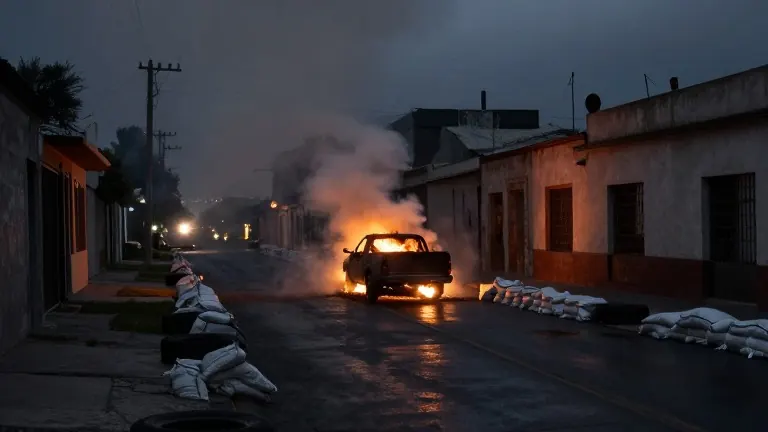
Mexican forces were unable to extract Meza Flores from Guasave until 4 a.m. on Saturday due to the intensity of the violence. A federal official, speaking on condition of anonymity, said the criminal group maintained at least 10 roadblocks with burning vehicles on the streets. “Getting him out was extraordinary,” the official said. Eight people were detained in total. Meza Flores and two others were marched by armed soldiers onto a military aircraft to appear before prosecutors in Mexico City.
The capture has been celebrated by security officials in both Mexico and the United States as a major security win. U.S. President Donald Trump has pressured the Mexican government to target criminal groups, and the U.S. had offered a $5 million reward for information leading to Meza Flores' arrest. U.S. Ambassador Ronald Johnson posted on X that the result was built on sustained cooperation and trust. “We will continue the hunt,” Johnson wrote. Mexican Security Secretary Omar García Harfuch called the detention “an important step in pacifying Sinaloa.”
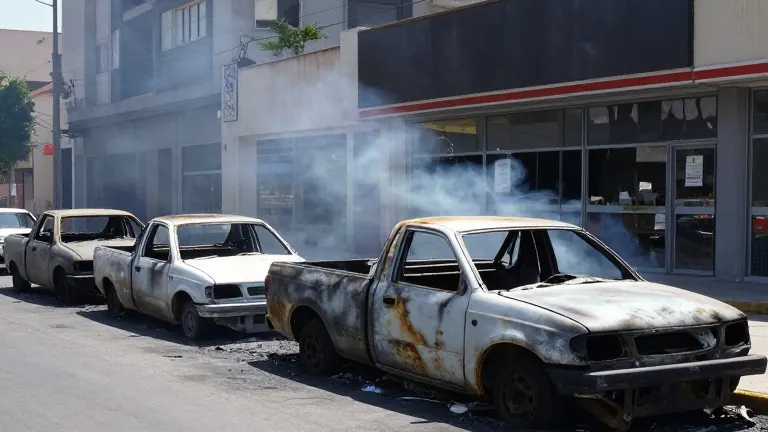
García Harfuch said armed forces would remain deployed in Sinaloa state to protect civilians and lamented the deaths of the four soldiers. Burned-out trucks continued to line the freeway leading into Guasave on Saturday, blocking roadways. Camacho noted that the aftermath of the violence was still visible, with several Oxxo convenience stores completely burned down. She added that residents remained very afraid because security forces were absent from the streets.
Security analysts warn that capturing high-profile leaders can trigger power struggles within cartels. David Saucedo, a Mexican security analyst, said the move relies on a strategy of targeting leaders without dismantling the entire organization. “What is evident is this is a product of pressure from the United States,” Saucedo said. He noted that while the leaders were arrested, the network of street-level dealers and political connections remains intact. The U.S. and Mexican governments continue to coordinate efforts to address drug trafficking and illegal firearms in the region.
Meza Flores had previously led the Beltrán Leyva cartel and was a key ally to the “Los Mayos” faction of the Sinaloa Cartel, which the U.S. designated as a foreign terrorist organization last year. His capture follows the military killing of Jalisco New Generation Cartel leader Nemesio Oseguera Cervantes in February. The operation marks a significant shift in the ongoing conflict between warring cartel factions in northern Mexico.
More News · Albuquerque news · Report a business · Got a Story?