Albuquerque Police Drones and New Rules Target Homeless in Bosque
A state of emergency and new city ordinances have increased surveillance and enforcement in public parks, prompting an ACLU lawsuit.
By Connor Murphy ·
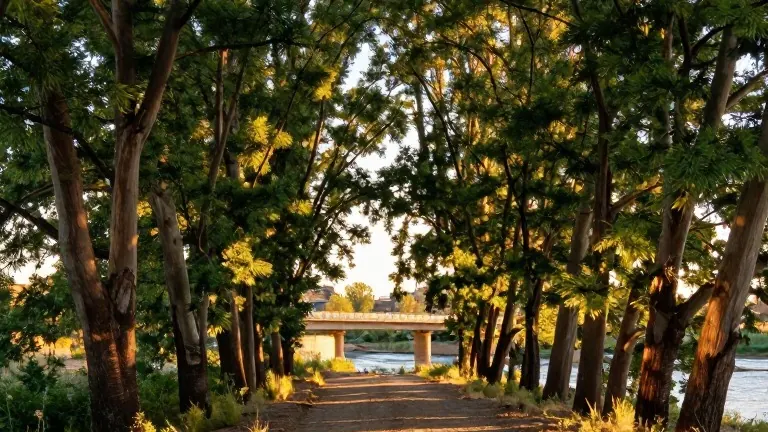
Residents of the Paseo del Bosque in Albuquerque are finding it harder to access the riverfront trails due to increased police patrols and new city regulations. The bosque, a 22-mile stretch of dirt trails lined with cottonwood trees, runs through the Barelas neighborhood. During July heat waves, the area is typically 5 to 7 degrees cooler than developed parts of the city. It serves as a refuge for runners, cyclists, and people experiencing homelessness seeking shade.
On a recent hot day, New Mexico State Police officers gathered six unhoused individuals near the National Hispanic Cultural Center. Patrolman Christian Roman stated that the group was trespassing on city-owned property and blocking traffic. He said the governor requested State Police assistance to ensure safety in downtown areas during a declared state of emergency. The individuals packed bicycles, tents, water jugs, and fishing poles under police supervision. One man, Pablo Moreno Olguin, said he was told to leave the previous day. He noted that shelters often feel restrictive, comparing the experience to being in jail.
Governor Michelle Lujan Grisham declared a state of emergency last year to address crime in Albuquerque. The initiative, named Operation Zia Shield, authorized the National Guard and other law enforcement resources to patrol high-crime areas. This occurred despite a decline in major crimes between 2024 and 2025. The city has also implemented stricter rules for public spaces. Mayor Tim Keller’s office now closes Robinson Park several times a day for cleaning and to discourage illegal behavior. A new city council ordinance, often called the sidewalk ban, criminalizes sitting, lying, sleeping, camping, or standing on public rights of way.
The Albuquerque Police Department has deployed drones from its Real Crime Center to monitor the bosque. These drones use high-definition zoom and thermal imaging cameras to detect heat signatures from bodies and fires. The Middle Rio Grande Conservancy District has also installed security cameras in areas with recurring issues like illegal dumping and trespassing. Footage from the police drones is uploaded to cloud storage and held for 30 days under standard body-worn camera policy. If the tape captures wrongdoing, such as illegal camps, it is kept longer. Messages asking APD to verify these details went unanswered.
Crystal Danielle Zamora, who was packing up her belongings, has been moving for over a year and a half. She and her boyfriend avoid shelters due to post-traumatic stress disorder. Zamora said the bosque provides necessary shade and a place to hide belongings. She noted that police often find people at night using drone thermal imaging. City officials say the area is a site for criminal activity, including illegal camping and spot fires. When items are removed during cleanups, Waste Management workers save only those that fit in a single storage bin for up to 90 days. Officer Roman said police do not typically throw away belongings but assist in moving them when campsites are designated to close.
Rachel Biggs, executive director of Albuquerque Healthcare for the Homeless, said the current approach creates a cycle of enforcement. Her organization provides medical and behavioral health services on Mountain Road and 1st Street. Biggs argued that resources are directed toward punitive technologies rather than housing vouchers or eviction prevention. She stated that criminalizing people experiencing homelessness makes the work of providing care more difficult.
The ACLU of New Mexico is suing the city of Albuquerque over its enforcement actions. Kristen Greer Love, deputy legal director at the ACLU, said the city is violating state constitutional protections against cruel and unusual punishment and guaranteeing due process. The lawsuit claims the city is illegally destroying property and forcing people out of public spaces. A city spokesperson said the administration has made historic investments to address homelessness, including mental illness and housing needs. The trial is scheduled to run from Nov. 30 through Dec. 18 in the 2nd Judicial District Court.
The case will determine whether the city’s aggressive enforcement strategies withstand constitutional scrutiny. Until the trial concludes, the bosque and other public parks remain subject to drone surveillance and new occupancy rules. The city continues to cite safety and cleanliness as primary reasons for the changes, while advocates focus on the lack of adequate housing options for the unhoused.
More Politics · Albuquerque news · Report a business · Got a Story?