Angel Fire gains local control of airport after 40 years
Village officials aim to expand passenger service and attract investment following the FAA's approval of the sponsorship transfer from Colfax County.
By Paula Delgado ·
Angel Fire Airport has an annual operating gap of approximately $150,000, a financial reality that village officials say justifies their push for greater autonomy. The gap exists because the airport generates about $350,000 in direct revenue against an annual operating budget of roughly $500,000, a figure that excludes capital projects and transfer costs.
Village and county officials gathered at the airport on Nov. 10 to mark the Federal Aviation Administration’s approval of a sponsorship transfer from Colfax County to the Village of Angel Fire. The event follows more than two years of collaboration between the two governments. While the FAA gave its sign-off in September, the transfer still requires approval from the New Mexico Department of Finance and Administration, a step village manager Bret Wier expects within coming weeks.
Mayor B.J. Lindsey described the ceremony as the start of a new chapter for the community. He stated that local ownership allows the village to establish priorities, pursue grants, and plan improvements more effectively. Lindsey emphasized that the airport serves the entire community, not just pilots, by creating opportunities for business development and tourism.
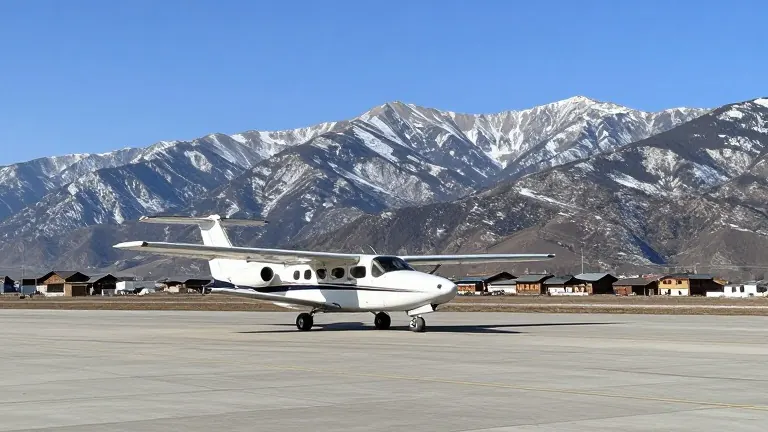
The airport sits at an elevation of 8,382 feet on a property spanning more than 220 acres. Located about 23 miles east of Taos, it features an 8,900-foot runway that supports private aircraft, charter flights, and seasonal commercial passenger service. The site is the fourth-highest airport in the United States, a characteristic that makes it valuable for pilot training in mountainous environments. The facility also supports emergency medical transportation and wildfire operations.
The village took over airport operations in 2024, but Colfax County retained responsibility for federal compliance and infrastructure oversight until now. With the transfer, the village gains authority over long-term planning. Officials plan to pursue FAA funding for a new master plan, a process estimated to take six months and include public input. That plan would examine runway and taxiway improvements, instrument approaches, and expanded aircraft parking.
Village leaders envision additional hangars, upgraded navigation systems, and more frequent commercial flights. A key priority is expanding scheduled passenger service between Angel Fire and Albuquerque. Advanced Air began seasonal flights between the two communities in the winter of 2024-25, restoring scheduled service that had been absent since Mesa Airlines operated winter flights in 1987. These flights provide residents and visitors with access to Albuquerque’s airport and medical facilities.
The airport’s history dates to 1954, when the LeBus family purchased Cienega Ranch and began developing the resort. The original site included a dirt airstrip, a country club, a nine-hole golf course, and Monte Verde Lake. The FAA certified the airport for general aviation under Colfax County sponsorship in 1983, three years before the Village of Angel Fire incorporated. County officials invested in land acquisition, runway construction, lighting, and other improvements with support from federal and state agencies.
More News · Albuquerque news · Report a business · Got a Story?