Bernalillo County officials seek changes to state civil rights law
County risk managers asked lawmakers to amend the statute during the January session despite a study showing no spike in lawsuits.
By Connor Murphy ·

A preliminary study found no surge in police resignations or lawsuit payouts in New Mexico since the state adopted its own civil rights act.
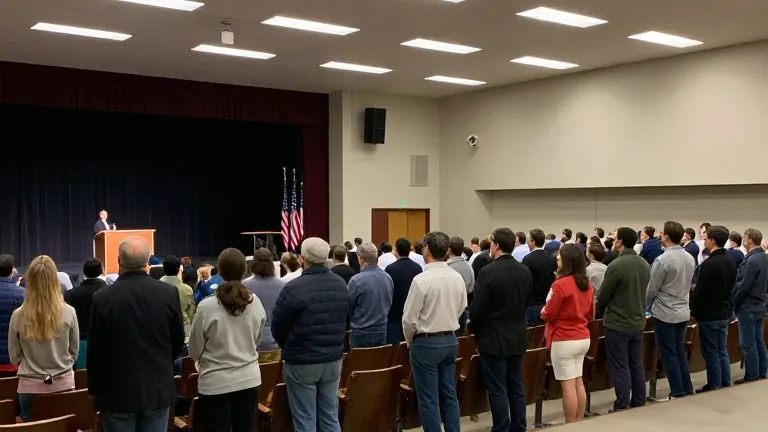
University of California, Los Angeles School of Law professor Joanna Schwartz presented the findings to the interim Courts, Corrections and Justice Committee on Thursday. The report, titled "Watching the Sky Not Fall," analyzed data from 2017 to 2023. It compared New Mexico and Colorado, which abolished qualified immunity, against Washington and Utah, which kept the defense.
The data showed that New Mexico and Colorado did not see a large rise in lawsuits filed against law enforcement. There was also no marked increase in the amount of money paid out in settlements. Police officer resignations and retirements peaked in 2021 across all four states. Schwartz attributed that peak to national protests following the murder of George Floyd. Insurance rates rose in all four states during the study period, but the data did not link those increases to the civil rights laws in New Mexico and Colorado.
Schwartz noted that some New Mexico law enforcement agencies did not fulfill her records requests. This limited the research team's ability to fully analyze the law's impact. She told lawmakers that the evolution of litigation will take years to fully develop. Lawyers will write and defend cases, and judges will issue rulings, she said. Researchers need more data before they can make definitive conclusions about the full impact of the statute.
Government officials expressed concern about the law's future costs despite the study's findings. Grace Philips, the risk management director for the New Mexico Association of Counties, asked lawmakers to amend the law in the legislative session starting in January. She identified three specific changes needed. First, the law should cap the amount of money awarded in these cases. Second, it should eliminate the practice where plaintiffs' attorneys recover money under both the state civil rights act and other laws in the same case. Third, plaintiffs must give government bodies advance notice before filing a lawsuit.
Philips said that limiting the amount of money awarded will help keep insurance pools for government entities solvent. The New Mexico Civil Rights Act initially capped claims at $2 million. A provision in the law states that this cap will increase annually based on cost-of-living metrics. Philips told the committee that the association is terrified about the solvency piece. She asked lawmakers to return to the $2 million limit.
State Rep. Marianna Anaya, D-Albuquerque, questioned how many settlements under the state civil rights law have reached the maximum payout. Philips said she did not have that figure readily available. Anaya pointed out that civil rights cases brought in federal court under the U.S. Constitution do not have a cap on damages. She said this lack of a federal cap is an incentive to keep the current state system, which appears comparatively good.
The New Mexico Civil Rights Act was signed into law by Gov. Michelle Lujan Grisham in 2021. The law allows residents to allege that their civil rights under the state Constitution have been violated. It made New Mexico the second state, behind Colorado, to eliminate qualified immunity as a defense for public officials such as police officers. Advocates for local government bodies and law enforcement agencies argued for years that the law would lead to costly settlement payouts and difficulties in recruiting and retaining officers. The new study contradicted those concerns for the law's first years.
More Politics · Albuquerque news · Report a business · Got a Story?