FCC approves SpaceX plan for one million orbital data centers
Regulators granted the license on Wednesday, setting a 2033 deadline for the first station while scientists warn of debris risks and sky brightness.
By Paula Delgado ·
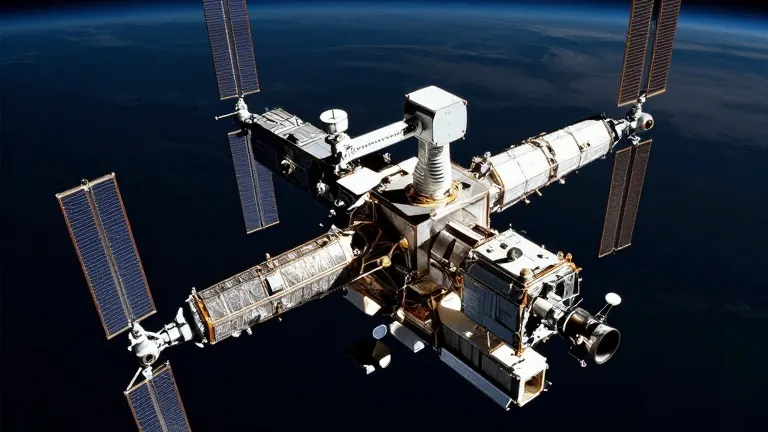
The Federal Communications Commission approved SpaceX's application to deploy one million satellites in space to function as data centers on Wednesday. The agency issued the license for a constellation named Starmind, which consists of orbital compute modules designed to process data for use on Earth.
FCC Chairman Brendan Carr stated that the decision positions the United States as a leader in the development of superintelligence. Carr, who was appointed by President Donald Trump, described the move as opening a bold new frontier in technology.
The authorization order includes specific deployment timelines. SpaceX is required to launch at least one space station by 2033. The company will then add more units gradually through 2040.
Elon Musk welcomed the decision via social media. The company has previously described the project as a method to harness the sun's energy to power artificial intelligence tools without relying on Earth's power grids.
Scientists have raised questions about the technical feasibility of the plan. Adam Becker, an astrophysicist and author, called the concept a fantasy. He stated on Wednesday that the project is not going to happen.
Becker pointed to physical limits regarding heat management in the vacuum of space. While space is cold, it lacks air to carry heat away from objects. Radiating heat out requires specific mechanisms that become difficult and expensive to scale across a million satellites.
The American Astronomical Society expressed concern over the impact on the night sky. The organization said it was disheartened and dismayed by the FCC's ruling. It noted that the proposed satellites would be larger and brighter than existing objects in low Earth orbit.
The AAS warned that these satellites would be visible as extremely bright objects for longer periods. This could undermine decades of federal investment in astronomical facilities and reduce the ability of astronomers and the public to study the night sky.
Becker also identified pollution of the night sky to the naked eye as a primary concern. He highlighted the risk of in-orbit collisions, which could create a cloud of debris in low Earth orbit where weather and telecommunication satellites currently operate.
The FCC acknowledged receiving a substantial number of public comments, including petitions to deny the request. The regulator maintained that the deployment serves the public interest and dismissed environmental concerns as outside its specific authority. Viasat, Kuiper Systems, and the AAS had all called for the denial of the license.
More News · Albuquerque news · Report a business · Got a Story?