Santa Fe Habitat for Humanity Launches Largest Ever Neighborhood Project
A new 90-home development on Santa Fe's south side aims to redefine affordable housing through pedestrian-friendly design and net-zero energy standards.
By Jasmine Coleman ·
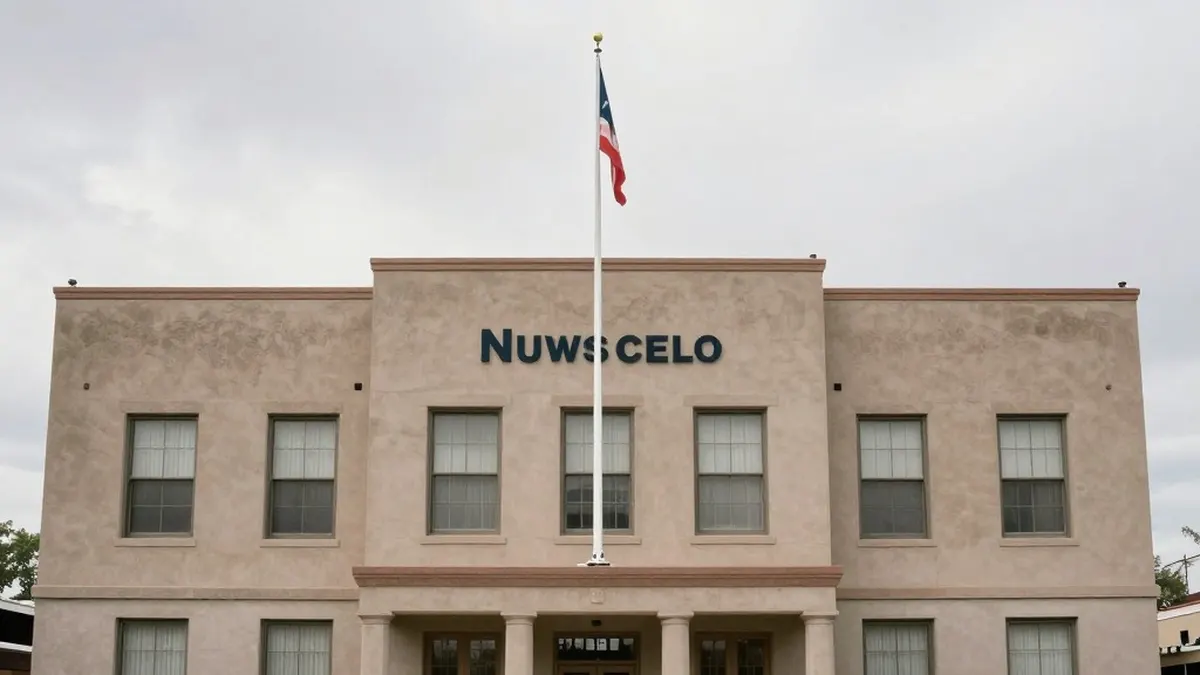
Habitat for Humanity broke ground on a 90-home subdivision along Airport Road on Santa Fe’s southwest side last week. The project, known as Casa de Todos, marks the largest development in the local nonprofit’s history and represents a shift away from traditional low-cost housing construction toward building complete affordable neighborhoods.
The 10.5-acre site was purchased for approximately $1.4 million in December. The property initially had approvals for a 58-lot subdivision featuring a central roadway. However, the organization convened architects, planners, and government officials to reimagine the layout. This redesign prioritized housing density, walkability, and the preservation of mature trees to mitigate the urban heat island effect prevalent on the city’s south side.
Jerry Little, director of construction services, noted that the original plans would have cleared a significant tree grove. The new design saves between 40 and 50 trees by shifting the roadway to one side and incorporating an alley. This change allowed the team to increase the number of planned homes by more than 50 percent while orienting them around shared, pedestrian-friendly spaces. The organization also intends to connect the subdivision’s green areas with neighboring developments to create larger communal spaces with walking trails and bicycle paths.
Cathy Collins, executive director of Santa Fe Habitat for Humanity, stated the goal is to create an exemplar for aesthetically pleasing and community-minded development. The homes will vary in size, including one, two, three, and four-bedroom units, to serve individuals and families at different life stages and income levels.
All homes in the development will be all-electric and equipped with solar panels. They are designed to achieve net-zero energy consumption, meaning they generate as much energy annually as they consume. The homeownership program targets households earning between 30 percent and 80 percent of the area median income.
Habitat acts as the lender for its homebuyers, offering 30-year, interest-free mortgages. Monthly payments are based on 30 percent of the household’s income. A second silent mortgage covers the gap between construction costs and buyer affordability, which is released at the end of the repayment period. Funding comes from donations, grants, and sweat equity, with individuals contributing 350 hours of labor and couples contributing 500 hours.
Participating in construction helps future homeowners understand their homes’ mechanics, preparing them for routine maintenance. The organization also provides classes on finances and mortgages. Despite the groundbreaking, significant financial hurdles remain. Little estimates infrastructure costs at roughly $4.5 million.
State lawmakers awarded $1.55 million in capital outlay funding during this year’s session, though the funds have not yet been accessed. The nonprofit is also awaiting final approval for $750,000 from the city’s Affordable Housing Trust Fund in December. Additional funding is planned for the upcoming legislative session.
To manage costs, Habitat does not borrow money for construction. Instead, it relies on available resources, which may slow progress if support is limited. The organization is recruiting individuals, businesses, and corporations to sponsor individual homes through financial contributions, materials, or skilled labor.
Habitat aims to begin building homes by the summer or fall of next year. Little anticipates the entire subdivision could take seven to 10 years to complete, depending on community support. The local affiliate plans to expand production to 10 to 15 homes annually, requiring additional volunteers and materials.
Originally published by News Media House
More News · Santa Fe news · Report a business · Got a Story?