Japanese director Hamaguchi's 'All of a Sudden' opens in Albuquerque theaters
The three-and-a-quarter-hour drama follows an elder-care director in Paris and a Japanese theater maker, adapting a true story of two women's friendship.
By Connor Murphy ·
Ryûsuke Hamaguchi’s new film, All of a Sudden, arrives in local theaters this week after earning strong critical attention for its unorthodox length and structure. The film runs approximately three hours and fifteen minutes. It does not follow a traditional three-act narrative, instead relying on long, uninterrupted scenes of conversation and observation.
The story is set in a for-profit elder-care facility in suburban Paris. Virginie Efira plays Marie-Lou, the facility director who is training her staff in a method called Humanitude. This real-world technique emphasizes hands-on, compassionate care for patients with dementia. The film depicts the friction that occurs when overworked staff resist these new practices due to limited resources and time.
Hamaguchi and co-writer Léa Le Dimna based the script on a nonfiction book of letters exchanged between two women. One of those women died from cancer shortly before the book was published. In the film, the second woman, Mari, is portrayed by Tao Okamoto. Mari is in Paris to direct an experimental play focused on mental health care, a subject that overlaps with Marie-Lou’s work.
The two women form a close intellectual bond after meeting by chance. Their connection is aided by language; each speaks the other’s primary language fluently. To prepare for their roles, Efira learned Japanese and Okamoto studied French. Their interactions center on a long night spent walking through Paris, discussing their backgrounds and their shared desire to improve their professional environments.
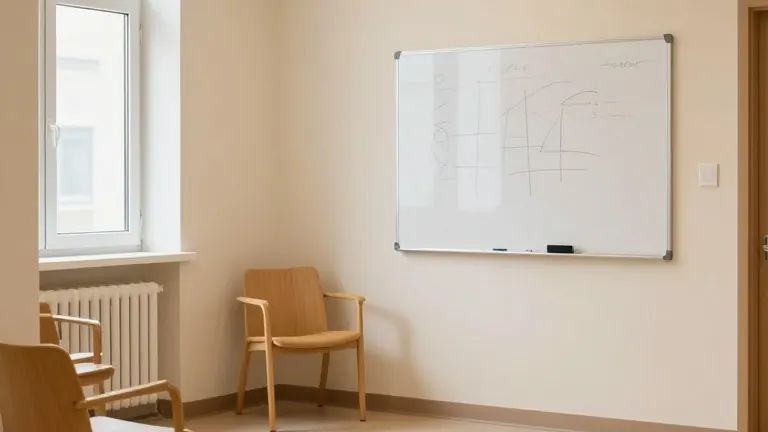
Hamaguchi has cited the work of Frederick Wiseman and Éric Rohmer as influences. The film combines the institutional texture of a documentary with the conversational flow of a romance. A notable sequence features Mari using a whiteboard to diagram the impact of capitalism on workers. While this might seem didactic on paper, the director trusts the audience to engage with the complex ideas presented by the characters.
The narrative explores the reality of working within administrative constraints and staffing shortages. Marie-Lou must learn to accept the limits of what her staff can achieve, while Mari confronts her own terminal illness. The film suggests that giving time to another person can be both draining and restorative, a theme Hamaguchi develops without sentimentality or cynicism.
Local screens will show the film in its original aspect ratio with English subtitles. Showtimes vary by location, with most venues scheduling afternoon and evening screenings. The film is rated PG-13 for thematic elements and mild language. Advance tickets are available at major ticketing platforms.
This is the first time the film has been shown in New Mexico. Local audiences will be the first in the state to experience the extended runtime in a theater setting. The film’s pacing requires a longer commitment from viewers than standard feature releases.
More Culture · Albuquerque news · Report a business · Got a Story?