Las Cruces mayor pro tem joins publisher at Nopalito's for news meeting
The encounter at the Mesquite Street restaurant included a history lesson on the building's past as a Baptist church and a discussion about local journalism.
By Paula Delgado ·
John P. Muñoz, mayor pro tem of Las Cruces, met with Patrick Dorsey, the publisher of The Santa Fe New Mexican, at Nopalito’s Restaurant in Las Cruces. The two men, along with Victor Gallegos, owner of the restaurant, gathered to discuss a new public service journalism initiative for Doña Ana County and Southern New Mexico. The meeting took place at the restaurant's location at 310 S. Mesquite Street.
Dorsey and a colleague traveled to Las Cruces specifically to meet with community leaders. Their goal was to outline the plans for The Las Cruces New Mexican, an effort designed to address the public service news needs of the region. Muñoz arrived shortly after arriving by phone, having asked Gallegos to look for two newcomers.
The restaurant where the meeting occurred has deep roots in the Las Cruces community. Victor Gallegos's parents, Jose and Ernestina Gallegos, met at the former Templo Bautista church on that street. They opened their first Las Cruces restaurant in 1964. In 1968, the couple converted the church building where they had met into their new dining establishment. The family also operates a second location at 2605 Missouri Avenue.
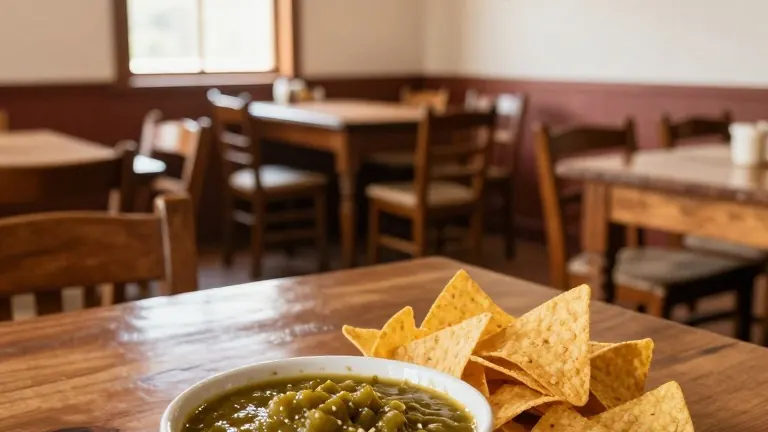
The Mesquite Street location is known for homestyle enchiladas, chile rellenos, and affordable prices. Victor Gallegos noted that the restaurant does not serve alcohol at this specific site. He explained that this restriction was part of the agreement made when the church was transformed into a family restaurant. The menu also features a warm green chile salsa, which Gallegos described as smooth with a hint of heat, paired with yellow corn tortilla chips. His mother, Ernestina, originally improvised the snack, and it became a staple item.
The building sits within the Mesquite Historic District, the original city site of Las Cruces. This neighborhood formed after the 1848 Treaty of Guadalupe Hidalgo established the borders for New Mexico, Texas, and Mexico. The El Camino Real de Tierra Adentro runs along Mesquite Street, passing directly by the restaurant. The National Park Service notes that when Las Cruces was formed, the Army's offer of free land attracted a mix of Mexican-Americans, Pueblo Indian descendants, and Eastern-Americans to the tract overlooking the river valley.
The area's history includes contributions from Buffalo Soldiers, members of the all-Black U.S. Army regiment, and Asian railroad workers. These groups helped shape the diverse identity of Southern New Mexico. Today, the U.S. Army patrols federal lands along the nearby border, a presence that continues 177 years after the city's formation.
Las Cruces is part of a larger economic region known as the Borderplex. This area includes El Paso, Texas, and Ciudad Juárez, Mexico, along with Doña Ana County. Economic Development New Mexico describes this combined area as having a population of more than 2.5 million. The region supports industries ranging from healthcare to rail transport and manufacturing. Companies in the area often operate mirror facilities on both sides of the border to manage international trade.
The lunch conversation between Dorsey, Muñoz, and Gallegos focused on local heritage and community stories rather than politics. The group discussed the history behind the meals and the role of the restaurant as a neighborhood gathering place. The meeting concluded with a shared appreciation for the local food and the enduring character of the Mesquite Street neighborhood.
More News · Albuquerque news · Report a business · Got a Story?