
NASA Opens Applications for 25th Astronaut Class Ahead of 2028 Lunar Landing
The agency is recruiting 10 to 15 new crew members to staff the lunar surface as it expands beyond low Earth orbit.
By Paula Delgado ·
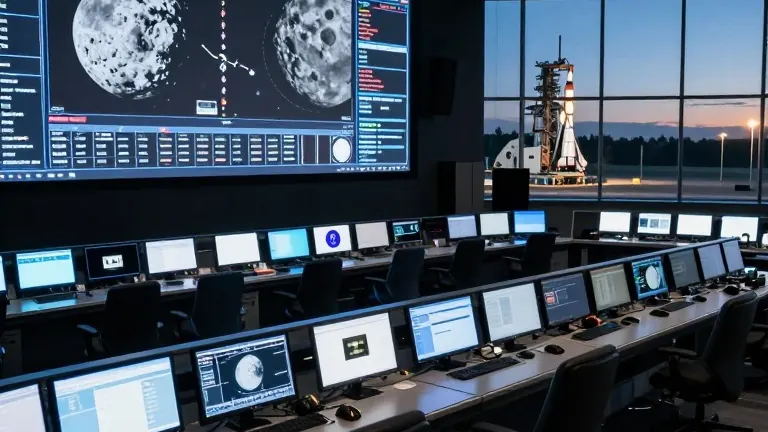
NASA began accepting applications for its 25th astronaut class on Saturday. The deadline for submissions is December 3. The agency plans to select the final cohort by late 2027. New candidates will begin mandatory training in early 2028. This is the same year NASA intends to return humans to the lunar surface for the first time in over five decades.
Space officials announced the opening of the recruitment drive during an air show at the Kennedy Space Center. The event focused on lunar exploration and aviation technology. The previous astronaut class was selected in September 2025. That process drew more than 8,000 applicants and resulted in the selection of 10 individuals. NASA currently has 32 active astronauts. The agency states it needs more personnel to expand human presence beyond low Earth orbit.
Randy Bresnik, commander of the Artemis III mission, told The Associated Press that the current roster is insufficient for the workload. "We have much more work than we can cover with the astronauts we have," Bresnik said. He urged potential applicants to submit their documents before the deadline. Bresnik and his three crewmates will launch into orbit next summer. Their mission will serve as a dress rehearsal for Artemis IV. They will practice docking their capsule with two lunar lander modules. One lander is built by SpaceX, the company led by Elon Musk. The other is built by Blue Origin, the company led by Jeff Bezos. This mission will stay near Earth and will not involve a lunar flyover. Artemis IV, scheduled for the following year, aims to land two astronauts near the lunar south pole.
Frank Rubio, a member of the Artemis III crew, emphasized the long timeline between application and flight. Rubio holds the U.S. record for the most consecutive days in space, with a total of 371 days. He noted that applicants must be U.S. citizens, hold university degrees, and have professional work experience. The mandatory training period lasts two years. It can be physically demanding. It may take several additional years after training to launch to space. Rubio told The Associated Press that the actual trip to the Moon represents only about 1% of the total experience. "What you are doing is contributing to the mission to go to the Moon," he said. The lunar base will expand over time as more rovers, robots, structures, and electrical networks are deployed.
The Artemis II crew completed a lunar flyover in April. That mission marked the start of the current lunar campaign. This new recruitment drive is the 25th astronaut class NASA has selected since the Mercury Seven program in 1959.