Sunlight-Powered Unit in Western Australia Tests Carbon Removal Technology
Banyu Carbon is trialing a dye-based system in Perth that uses sunlight to strip carbon dioxide from the air, aiming to prove a low-energy alternative to existing direct air capture methods.
By Connor Murphy ·
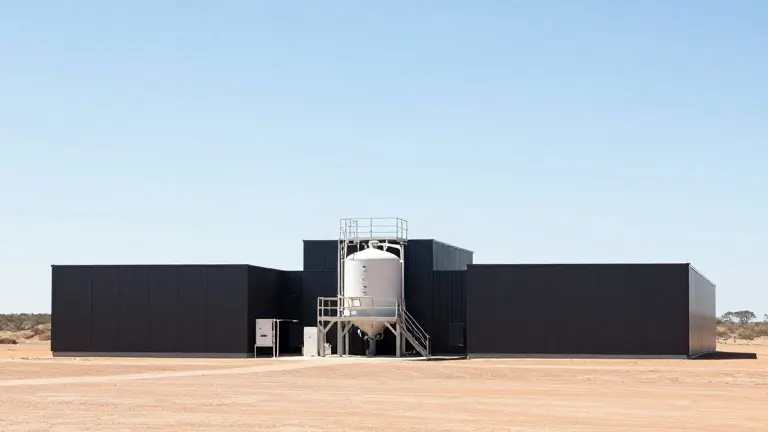
Alex Gagnon and Julian Sachs are testing a machine in Western Australia that uses sunlight to pull carbon dioxide from the air. The device sits on a strip of land just south of Perth, where it demonstrates a process that requires no heat or large energy plants. The technology relies on dye molecules to capture carbon pollution, a method the founders developed after working on coral reefs in the Pacific.
The project began a decade ago on Tetiaroa, a private atoll north of Tahiti that Marlon Brando once owned. Gagnon, an associate professor at the University of Washington, and oceanographer Sachs were there to study how rising carbon levels affect coral reefs. Their research involved moving carbon between deep and shallow water to simulate ocean acidification. They realized they could reverse the process to extract carbon from the atmosphere.
In 2016, the pair identified photoacids, or light-sensitive dyes, as a potential tool. The underlying chemistry was revealed in 2013 by the Australian Commonwealth Scientific and Industrial Research Organisation, known as CSIRO. Banyu Carbon, a Seattle-based company co-founded by Gagnon and Sachs, secured an exclusive license to the photoacids in 2024. The team spent three years developing the chemistry to remove carbon pollution at a commercial scale.
The current demonstration model removes one ton of carbon over 12 months. Air is sucked into a dark unit where it meets a water-based solution containing the dye. The solution absorbs carbon dioxide and is then run through panels exposed to sunlight. Sunlight turns the dye acidic, forcing it to release a stream of carbon dioxide. The dye is reused continuously, and the captured carbon can be stored or used in industrial processes.
Gagnon said the process is the only one that uses sunlight-driven removal. He noted that the system does not need pipelines or large energy plants. The carbon is currently being re-released during the trial, but the goal is to prove the technology can scale for direct air capture and storage.
The carbon removal industry is facing headwinds. Last year, Climeworks, a major direct air capture company with facilities in Iceland, laid off about 20% of its staff. This year, Microsoft cut its investment in the sector, a move interpreted as a sign of shifting priorities. Conventional methods like tree planting still account for 99.9% of the 2.2 billion tons of carbon removed annually, while novel technologies remove a tiny fraction.
Banyu Carbon has raised $8.5 million from investors and secured buyers including H&M and Shopify through a $500,000 pre-purchase contract. The company aims to scale up in the early 2030s to extract half a million tons per facility per year at a cost of $200 per ton. Gagnon said the work is essential because the world continues to burn fossil fuels. He added that researchers must work on solutions to reduce the overwhelming impact of carbon pollution.
The next few years will test the viability of this nascent industry. Financiers are waiting for clear signals that these products have market value. Giana Amador, executive director of the Carbon Removal Alliance, said the sector is in a messy middle era. She believes costs are coming down and technology is improving, even as the market for carbon removal must be created from scratch.