New Congress Seeks to Cool Fuel Prices After Iran War Hike
Oil prices remain high despite a Democratic sweep, and analysts warn pump prices may not drop until 2027.
By Connor Murphy ·
Democrats hold a wide majority in the new U.S. Congress, a victory driven largely by voter anger over fuel costs. The war in Iran disrupted global oil supplies, pushing prices to levels that strained household budgets across Bernalillo County and the rest of the nation.
Before the conflict, roughly one-fifth of the world’s oil flowed through the Strait of Hormuz. As the war restricted that waterway, Brent crude prices jumped from about $70 per barrel in late February to near $95 today. This spike has raised the cost of nearly every product that relies on trucking for distribution.
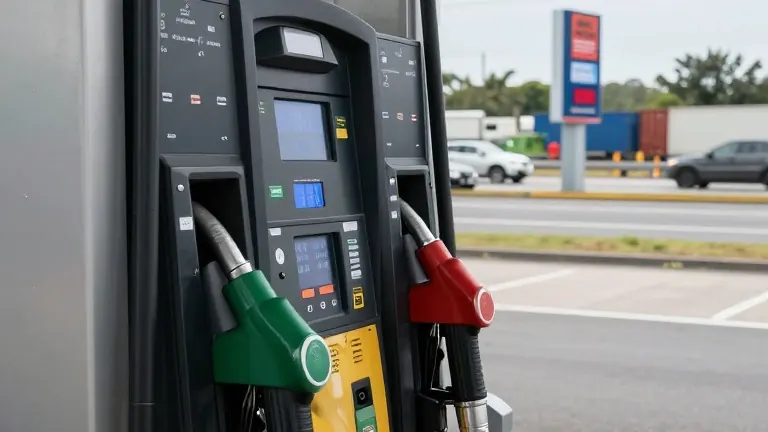
At the local level, the impact is visible at the pump. AAA reports the average gasoline price now stands at $4.12 per gallon, an increase of about one dollar compared to last year. Diesel prices reached a record high of $6.52 in September. Although diesel has dropped slightly since that peak, a gallon still costs about $2.50 more than it did at this time last year.
The new Congress will not be sworn in until January. Until then, the current administration continues to control trade and defense policy. President Trump recently used executive power to ease fuel costs by loosening rules on dyed diesel and temporarily lifting sanctions on Russian diesel exports. Neither measure has produced a large drop in prices.
Senate Minority Leader Chuck Schumer, representing New York, told reporters on Wednesday that Democrats intend to end the war. He stated, "relief is on the way." He noted that a unified Democratic Congress can make military escalation more expensive by attaching conditions to war spending and holding back confirmations of key officials.
Claudio Galimberti, chief economist at Rystad Energy, wrote that both chambers of Congress can pass resolutions to constrain the president’s military options. However, the president retains veto power and full authority over military strikes, blockades, and sanctions. Jorge León, head of geopolitical analysis at Rystad Energy, said this executive authority remains a major factor in price stability.
President Trump has sent mixed signals about the war. In recent weeks, he warned Gulf Arab countries to prepare for a new military campaign. On November 2, U.S. forces struck Qeshm, an island in the Strait of Hormuz used by Iran. The day after the midterms, Vice President JD Vance posted on social media that the war was the reason the administration lost seats.
Jaime Brito, executive director of refining and oil markets for Dow Jones Energy, said traders will look for formal announcements that both sides are pulling back military forces. If the peace holds, Brito predicts crude prices could fall by $15 to $20 per barrel within two or three days of the announcement.
However, lower oil prices do not immediately translate to lower pump prices. Ships currently taking long routes around the Strait of Hormuz must return to normal lanes. This could cause traffic jams at the strait. Once the oil arrives, it must be refined and transported to stations. Brito estimates it could take three months after a ceasefire for gasoline and diesel to reach prewar levels.
León offers a longer timeline. He expects it to take six months for crude to return to prewar prices, followed by another one or two months for gasoline and diesel to catch up. Both analysts noted that hiccups in the process could stretch the recovery to a full year. Brito warned that high freight costs and insurance premiums for ships avoiding the strait keep baseline costs elevated. He concluded that a definitive end to the conflict is necessary for prices to normalize.
More Business · Albuquerque news · Watch Your Wallet · Report a business · Got a Story?