New Mexico Democrats hold House seats as national margin shrinks to historic low
Local results show a competitive state that contributed to the Democrats' narrow national victory in the U.S. House of Representatives.
By Connor Murphy ·
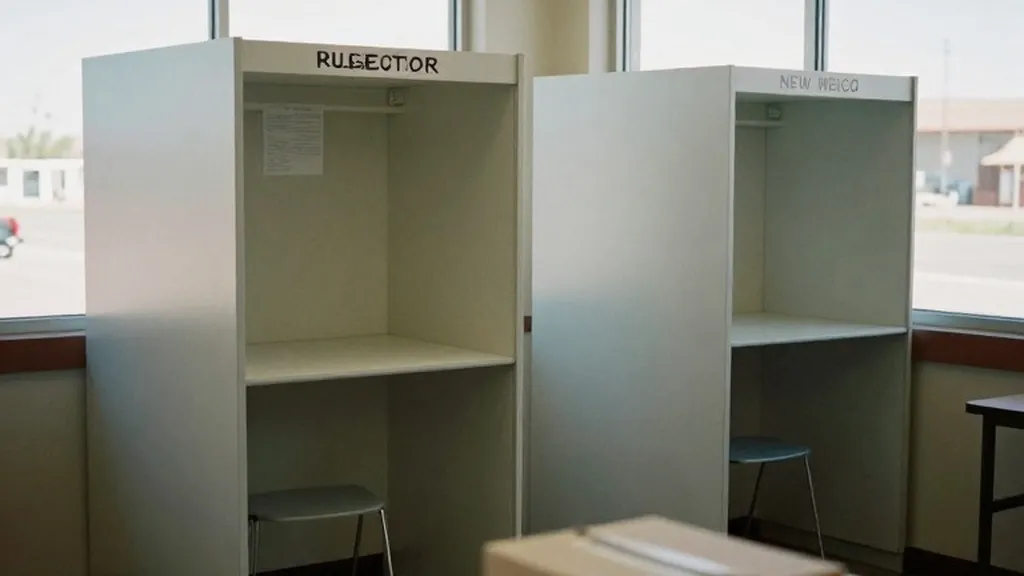
Residents of Bernalillo County, including voters in Albuquerque and Rio Rancho, completed their participation in the 2026 general election on Tuesday, November 3. Polling places across the county remained open from 7 a.m. to 7 p.m., allowing citizens to cast ballots for federal, state, and local offices. The election featured a U.S. Senate race with incumbent Ben Ray Luján seeking re-election, a governor’s race with no incumbent running, and all state U.S. House seats on the ballot. Local voters also considered several statewide ballot measures and constitutional amendments regarding bond issues and government operations.
The outcome of the U.S. House elections in New Mexico contributed to a significant national shift in power. Democrats secured a majority in the chamber, gaining control after a period of Republican dominance. This result is part of a broader trend where voters in the state participated in a referendum on the current administration, with many citing high prices and government performance as key factors in their decision. The state’s congressional delegation will now reflect the national partisan balance that emerged from the November 3 vote.
Nationally, the margin of victory for the Democrats in the U.S. House was remarkably narrow. As of 4:00 PM ET on November 6, Democrats had won 250 seats while Republicans had won 157 seats, with 28 races remaining uncalled. This projection indicates a Democratic majority of 93 seats. However, the net change in seats was 41, falling short of the 48-seat threshold typically defined as a wave election. The narrowness of the final margin, combined with the number of uncalled races, suggests a closely contested environment that will define the legislative agenda for the next two years.
The national race for control of the House was characterized by intense competition in battleground districts. Democrats needed to gain a net of three districts to win the majority, a threshold they surpassed with room to spare. Republicans, who held a 220-215 majority prior to the election, lost more than two districts, resulting in the transfer of power. The election saw a high level of voter engagement, with more than 59 million people casting ballots before Election Day, surpassing early-voter turnout from 2022. This surge in participation helped drive the results that shifted the balance of power in Washington.
In New Mexico, the U.S. House races were part of a slate that included state and local offices. The state’s congressional map, which has been stable in recent cycles, saw candidates from both parties competing for the same seats as in previous elections. The results in the state align with the national trend of Democrats making gains in both chambers of Congress. This shift is expected to impact oversight of the executive branch and the legislative process, as the new majority takes office on January 3, 2027.
The governor’s race in New Mexico was also a key local contest, with an open seat and no incumbent running. This race, along with the U.S. Senate contest, formed the core of the statewide ballot. Voters in Bernalillo County, the most populous in the state, played a crucial role in determining the outcome of these races. The state also faced decisions on several ballot measures, including questions on bonds for senior citizen facilities, public education, and higher education, as well as constitutional amendments affecting state executive powers and local government.
The national picture of the 2026 midterm elections reveals a electorate that is deeply engaged and focused on economic concerns. Polls indicated that voters were frustrated with the direction of the country, with many citing inflation and the cost of living as crucial factors in their vote. The Democrats’ ability to connect with these issues contributed to their success in flipping the House. The narrow margin of victory underscores the importance of every district in determining the future of the legislative branch.
For Bernalillo County, the results confirm a competitive political landscape that mirrors the national trends. The county’s voters, along with those in other parts of New Mexico, helped shape the composition of the U.S. House of Representatives. The new delegation will take office in January, ready to address the priorities that drove voters to the polls on November 3. The election marked a significant moment for the state, with the outcome of the House races influencing the broader political dynamics in the region.
The Democrats’ victory in the House is a result of a coordinated effort to turn out voters and highlight the administration’s record. The narrow margin of the final count, with 28 races still uncalled as of the latest reports, means that the exact number of seats may shift slightly. However, the projection of a 250-157 majority is solid, giving the new leadership a clear mandate to act. This outcome is expected to lead to increased scrutiny of federal policies and a potential shift in legislative priorities.
In the state of New Mexico, the election results reflect a mix of local and national influences. The U.S. House seats, along with the Senate and governor’s race, were decided by voters who were concerned about the economy and the direction of the country. The results in Bernalillo County, with its large population of voters in Albuquerque and Rio Rancho, were instrumental in shaping the state’s delegation. The election concluded with a clear shift in power that will impact the state’s representation in Congress.
As the new Congress prepares to convene, the focus will turn to the priorities of the incoming majority. The narrow margin of victory in the House suggests that bipartisan cooperation may be necessary to pass significant legislation. The results in New Mexico, including the U.S. House races, are a testament to the importance of local elections in shaping national policy. The state’s voters have spoken, and their choices will guide the legislative process for the next two years.