Rare desert wildflower gets federal protection push
The Fish and Wildlife Service proposed listing Tharp’s bluestar as endangered, but did not propose critical habitat at this stage.
By Paula Delgado ·
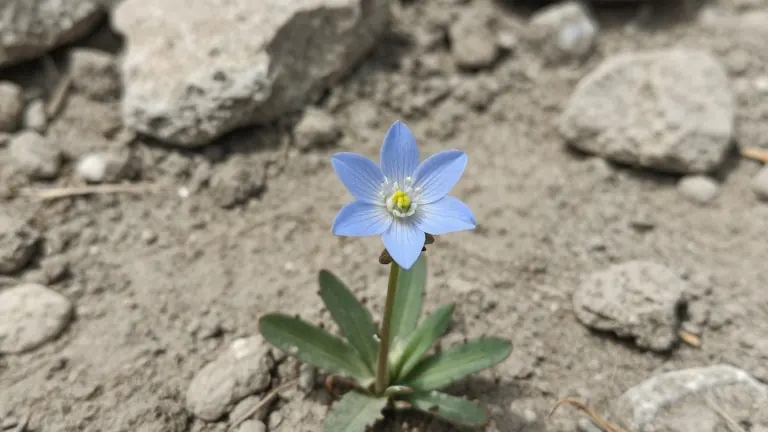
The U.S. Fish and Wildlife Service proposed listing Tharp’s bluestar as an endangered species on Friday. The agency said the move is warranted based on the best available scientific and commercial information. The service did not propose critical habitat for the plant at this time.
The plant is already listed as endangered by the state of New Mexico. It grows in alkaline soils among limestone and gypsum hills in the Chihuahuan desert. Known populations exist in Eddy County, New Mexico, and Pecos County, Texas. The species reaches about 24 inches in height and blooms with star-shaped flowers in spring or after monsoons.
The agency noted that the species occurs at only seven sites. Six of those sites are in New Mexico, and one is in Texas. The total area covered by these sites is approximately 400 acres. The service cited the small population, limited distribution, habitat loss, and drought conditions as reasons the plant is vulnerable to further declines.
The New Mexico Rare Plant Technical Council noted that active energy development exists near the known populations in New Mexico. In August, the Fish and Wildlife Service described collaborations between the Bureau of Land Management, the New Mexico State Land Office, and developers. These groups have conducted surveys and adapted projects to protect the bluestar.
Carlsbad’s BLM field office said it works with oil and gas operators, ranchers, and recreationists to keep at-risk species abundant. The office stated that for Tharp’s bluestar, the soil outcrop habitats are finite. It added that developers do not disrupt oil and gas activities any more than a pond or a fence would.
The 60-day public comment period ends on Jan. 29. The proposed rule to list the bluestar as an endangered species is scheduled for publication in the Federal Register on Monday. The service is seeking input from governmental agencies, tribes, industry, and the scientific community.
The plant’s flowers are described as pale-blue or greenish-white. The technical council’s website identifies the species as Amsonia tharpii. It is native to the Permian Basin region that straddles New Mexico and Texas.
More News · Albuquerque news · Report a business · Got a Story?