Solstar's orbital router transfers 2,300 files
The Santa Fe company says the Deke Space Communicator proved it can handle heavy data loads during a maneuver between two spacecraft.
By Paula Delgado ·
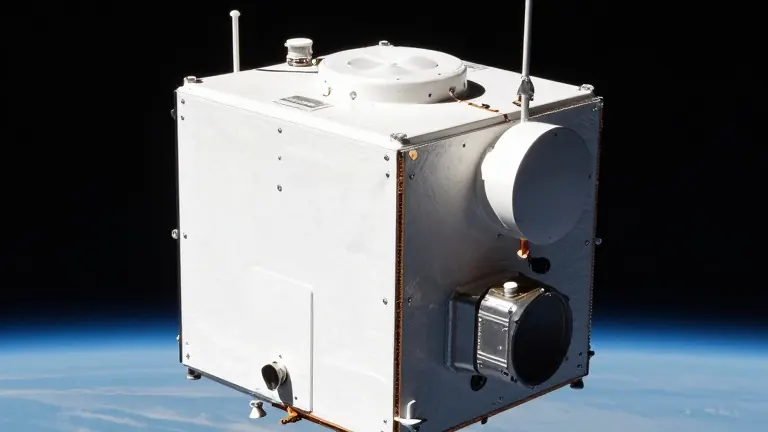
Solstar Space Co. moved 2,300 data files through space last month. The transfer included images, telemetry, and health-status data. The files moved during a 30-minute proximity operation. The operation occurred between NASA's R5-S10 Cubestat and Momentus Inc.'s Vigoride-7.
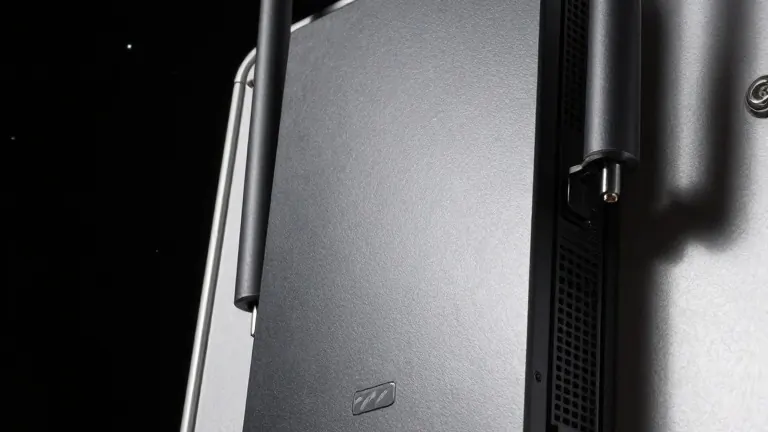
The Deke Space Communicator sat aboard the Vigoride spacecraft. It relayed the data to NASA's Johnson Space Center in Houston. Iridium Communications Inc. provided the network link for the transmission. The satellite carrying the device moves at 17,000 miles per hour.
Solstar founder and CEO Brian Barnett said the milestone proves the company can lead a market he projects will reach nearly $4 billion. Barnett previously worked for NASA. He noted that consumer routers cannot survive the vacuum of space. Solstar builds devices with hardened materials to withstand extreme temperatures and radiation.
The company tests its equipment at a laboratory in Albuquerque before launch. Barnett said the devices also function as networking computers. This design allows them to manage data traffic in space. Solstar calls itself the first internet space provider.
The company formed in 2017. That timing aligned with NASA's retirement of high-bandwidth communications on its tracking and data relay satellites. The withdrawal of that government system opened a private market for space internet firms. Solstar now holds a leading position with a working proof of concept in orbit.
In 2025, Solstar began work under a $15 million agreement with Momentus Inc. A SpaceX Falcon 9 rocket launched the Momentus-operated spacecraft from Vandenberg Space Force Base in Santa Barbara, California, in March. The Deke system powered on in orbit on April 15.
Barnett aims to secure steady revenue through network fees. He wants this income to supplement sales of hardware and software to government and private missions. Network fees provide a stable stream of money. This stability helps the company weather economic downturns.
Investors have responded to the company's progress. Encore Technologies Corp. invested $1 million in Solstar in July. The investment came through a convertible loan. Barnett said a handful of competitors exist in satellite communications. More companies are entering the market. He stated Solstar plans to stay a leader in the field.
Solstar is now working on Wi-Fi for the moon. The company holds Small Business Innovation Research contracts. These contracts support the development of space-based relays for the U.S. Space Force. Solstar is also developing a lunar Wi-Fi access point for NASA. The work supports the Artemis mission to return humans to the lunar surface.
Barnett said SpaceX and Blue Origin will begin building landing systems on the moon in the next year or two. He sees opportunities to equip lunar rovers and spacesuits with Solstar Wi-Fi. He said spacesuits need Wi-Fi to communicate on the moon without strings or wires.
More Tech · Albuquerque news · Report a business · Got a Story?