Trump Threatens Heavy Tax on Overseas AI Data Centers
The president's warning comes as domestic opposition to new server facilities grows and the Senate moves to speed up energy infrastructure permitting.
By Scott Marshall ·
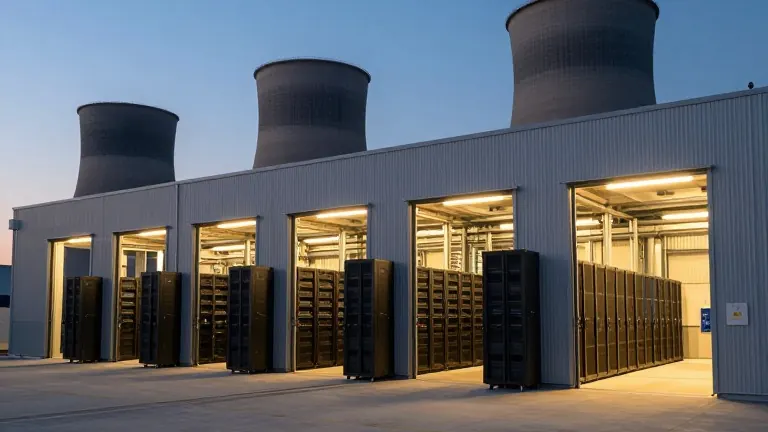
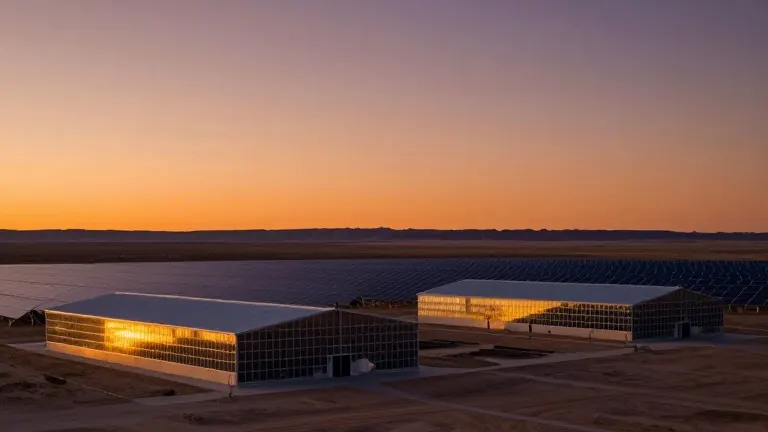
President Donald Trump said on Friday that the United States would impose a "tremendous tax" on American companies that build artificial intelligence data centers outside the country. Speaking at the White House shortly after returning from a trip to Asia, the president warned that such a move could cause the nation to fall behind China in what he calls "super intelligence." He stated plainly that while companies are free to build abroad, the financial penalty would make it less attractive.
The threat lands at a moment of intense political friction over where these massive facilities should be located. Trump said he had not yet briefed his staff on the specific details of the proposal, and it remains unclear how the tax would be enforced. He contrasted the situation with advanced computer chips, which he said had been "very destructive to our country" because they are produced abroad. His goal is to keep the AI infrastructure buildout domestic, arguing that it is critical for winning the global AI race.
Public opinion in the United States points in a different direction. According to the AP Voter Poll, about three-quarters of U.S. voters in this year’s election opposed the construction of a new data center in their community. A separate survey by the AP-NORC Center for Public Affairs Research and the Energy Policy Institute at the University of Chicago found that about 6 in 10 Americans support limiting the number of new data centers. These views held across party lines, with majorities of both Democrats and Republicans favoring limits.
Residents also expressed deep concern about the local impacts. The same summer survey found that a majority of Americans are "extremely" or "very" concerned about how data centers affect electricity prices and the water supply in their communities. This skepticism contributed to a Republican wipe-out in the midterm elections less than three weeks before Trump's Friday remarks. With Democrats now holding large majorities in both houses of Congress, a tougher regulatory environment for AI giants and data center developers is expected.
Trump suggested that the tension could be resolved through direct negotiations between tech companies and local communities. He proposed that deals could include tax breaks, reduced utility bills, funding for teachers, or direct payments to local residents. "Make the deal," he told reporters. "They have plenty of money. Take it." He emphasized that he wants the companies to build the infrastructure in the United States rather than overseas.
Tech giants are already adjusting their strategies to address local mistrust. Officials from Google and Meta told the Associated Press that they are trying to be more transparent with communities where they plan to build. They are offering assurances that data centers will boost local property values and reducing their environmental impact. Many of these companies, including Google, already operate data centers in Asia and Europe, making Trump's proposed tax a direct challenge to their current global footprint.
The economic stakes are high. Economists at UBS estimate that the largest high-tech firms will spend as much as $1.8 trillion next year developing AI, mostly on data centers. This spending has boosted wages for skilled construction workers, particularly electricians who are in short supply. However, most economists note that much of the economic gain is offset by the fact that most goods powering data centers, such as semiconductors and copper, are imported.
On Thursday, the Republican-led Senate approved bipartisan legislation to speed up permitting reviews for power plants, transmission lines, and other energy infrastructure. The bill aims to increase the nation’s energy supply to meet surging demand and lower electricity prices. The legislation would shorten the timeline to start big energy projects and ensure data centers pay for the energy they use and upgrades to the transmission network.
Trump praised the Senate bill, saying it is going to cause "tremendous amounts of new building." The legislation now moves to the House for a vote. While cloud computing remains the dominant use of data centers in the U.S., the development of artificial intelligence is a key growth factor driving new construction. The industry officials maintain that AI is a positive force for the American economy, even as they work to win over skeptical local communities.
More Business · Albuquerque news · Watch Your Wallet · Report a business · Got a Story?