UNM scientists find toxin that helps African lungfish survive on land
New research in Cell shows a naturally occurring substance remodels fish skin to protect against dryness during annual droughts.
By Paula Delgado ·
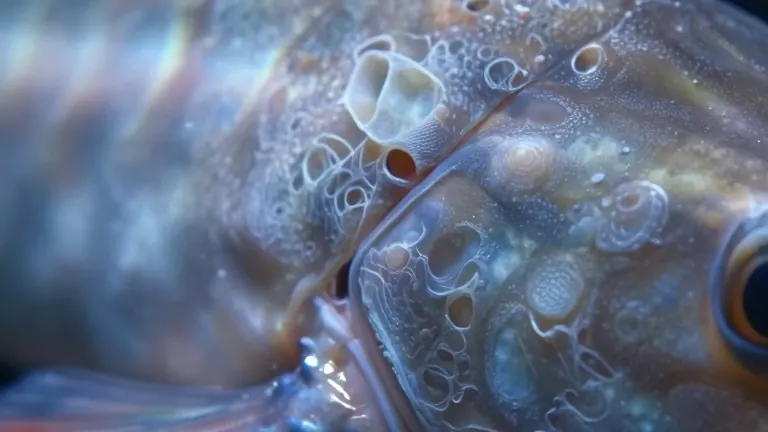
African lungfish use a naturally occurring toxin to reshape their skin when they leave the water during yearly droughts. Researchers at The University of New Mexico identified this mechanism in a study published in the scientific journal Cell on Monday.
The findings reveal how these vertebrates adapt to terrestrial environments. The team led the investigation into how animals evolved to live underwater developed the capacity to survive on land.
Professor Irene Salinas, the study leader, and first author Dr. Daphne Siciliani, a postdoctoral fellow of the Life Sciences Research Foundation, directed the work. Siciliani is also a researcher in the Salinas lab. Their research began five years ago when they sought mechanisms that allow lungfish to be plastic and adaptable.
Salinas and her team are immunologists. They hypothesized that the immune system was implicated in the skin transformation process. Prior observations showed that immune cells called granulocytes flood the African lungfish skin when territorialization is induced in laboratory settings.
The team discovered a unique gene in the lungfish genome. This gene expressed proteins in the skin of aquatic lungfish, but levels increased tremendously when the animals adapted to land. The researchers identified the substance as a toxin named Protop-CrTX.
"I never thought we would stumble upon something as cool and exciting as a toxin," Salinas said. "Serendipity revealed a unique gene in the lungfish genome that was expressed in the skin in aquatic lungfish, but levels increased tremendously when animals were adapted to land. Unfortunately, this was a risky project."
Siciliani noted that the team had no prior information about the toxin or its relatives when they began examining available databases. Lungfish are not known to be venomous or toxic to humans or other animals, which made the discovery puzzling.
To test the function of the substance, the team created a recombinant version of the toxin. They exposed different skin cell types to it. The experiments showed that the toxin punched tiny holes in target cells, causing potassium to leak outside and creating damage. However, in lungfish, the cells evolved to prevent potassium leakage and repair the pores.
"In a series of experiments, we show that a drop of this toxin is sufficient to turn the skin of an aquatic lungfish into skin that resembles a land-adapted lungfish, demonstrating that this toxin is a tissue-remodeling molecule," Siciliani said. "Interestingly, over evolutionary time this toxin has been repurposed to better support tissue remodeling functions. This happened by adding many pieces to an originally simple gene that contained only one exon."
The study demonstrates that granulocytes, which are fast-moving immune cells, secrete the toxin in the skin. These cells allow the fish to sculpt skin regions on demand. The team believes the ancestral toxin gene originated in a bacterium and was transferred to marine lungfish ancestors millions of years ago. Over time, African lungfish repurposed this toxin to become less toxic and better at self-inflicting skin remodeling.
The work was funded by two National Science Foundation awards and the Life Science Research Foundation. Researchers in the Salinas lab, including former postdoc Ottavia Benedicenti and bioinformatics specialist Marijan Posavi, participated in the study. Collaborators outside UNM in the United States and Europe also contributed to the research.
More Tech · Albuquerque news · Report a business · Got a Story?