Yamazaki Returns to Godzilla for Imax Sequel
The director of the Oscar-winning 'Godzilla Minus One' is back in theaters with a new installment featuring King Ghidorah and a first for Japanese cinema.
By Scott Marshall ·
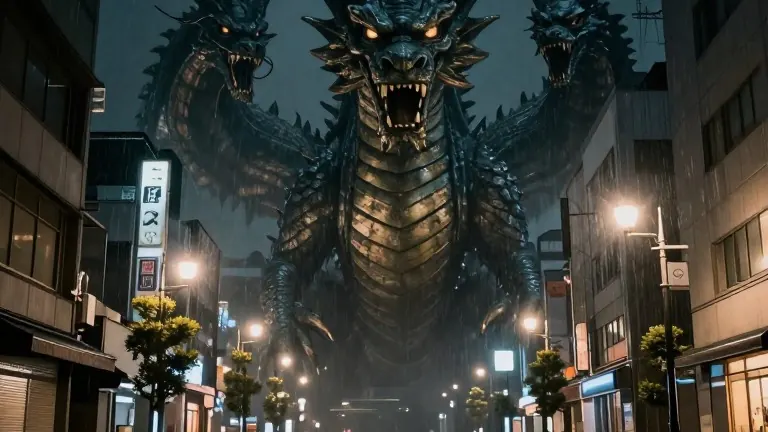
Japanese cinema has a new entry in the long-running kaiju franchise, and it marks a technical first for the genre. 'Godzilla Minus Zero' is now in theaters, bringing back the Shikishima family from the previous installment. This film is the 38th entry in the Godzilla series and the 34th produced by Toho, the company that created the character.
The story begins in 1949, two years after the events of the first film. The plot follows the family as they face a new disaster involving King Ghidorah. Yamazaki serves again as director and VFX supervisor. He previously won the Oscar for visual effects for 'Godzilla Minus One' in 2025. At the time, he became the first director to win that specific award since Stanley Kubrick for '2001: A Space Odyssey' in 1969.
Reflecting on that victory, Yamazaki said it was a shock. He noted that the Academy's response showed an openness to films from different markets. The win, he said, opened doors for his career. That momentum led directly to this sequel. The film stars Kamiki Ryunosuke and Hamabe Minami. It is the first Japanese feature film shot specifically for Imax screens.
Yamazaki discussed the creative process behind the new monster. King Ghidorah is a major figure in the franchise's history. The character first appeared in 'Ghidorah, the Three-Headed Monster' from 1964. That film featured destruction in Matsumoto City, the place where Yamazaki was born. As a child, he wanted to see the monster destroy his hometown. The 1964 film only showed Ghidorah flying over Matsumoto Castle. Yamazaki said this new film finally realizes that childhood dream by having the monster smash up the city.
The production faced specific technical challenges to convey scale. Yamazaki designed a scene where Godzilla emerges from the ocean to chase a seaplane. The screenplay called for a simple chase, but the visual execution was complex. Godzilla in this film is 50.1 meters tall. To make the creature look larger on screen, the team used long-lens visual effects. This technique compressed the depth of field. The shot required 2 billion water particle effects to render. The goal was to show the threat of the monster as the plane tried to take off.
Casting the young lead presented its own hurdles. The character Akiko was played by Sae Nagatani. She was two years old when the first film was shot. The crew would start filming when she was about to cry or get cranky. For the new movie, Nagatani is five years old. Yamazaki said she understood the scenes well and provided authentic reactions without much direction.
Another key sequence involves a mother and baby levitated by Ghidorah's gravity beam. They fall from a height, a moment designed to show the monster's power. The set was built with a slight tilt. Drones were used to capture the movement around the set. VFX expanded the visual impact. The scene serves as a direct expression of the terror Ghidorah inspires.
The title 'Godzilla Minus Zero' refers to the concept of neutrality. Yamazaki explained that the characters are trying to return to an ordinary life after tragedy. In mathematics, a negative sign before zero indicates approaching zero. The family is clawing their way back to that neutral state. The film is now playing in theaters. Yamazaki left the possibility of a third installment open, telling the audience to stay excited.
The production team focused on intertwining human actions with kaiju reactions. Yamazaki insisted that the two layers of the story were not separate. Human choices affected the monsters, and the monsters' responses drove the humans. This interconnection was central to the film's engagement. The visual effects team spent significant resources on the water particles and the levitation scene to ensure the audience felt the threat.