EU Leaders Fail to Resolve 1.7 Trillion Dollar Budget Impasse
EU leaders failed to reach a consensus on the bloc's next long-term budget during a 12-hour summit in Brussels, leaving negotiators under pressure to agree before a key year-end deadline.
By News Media House Staff ·
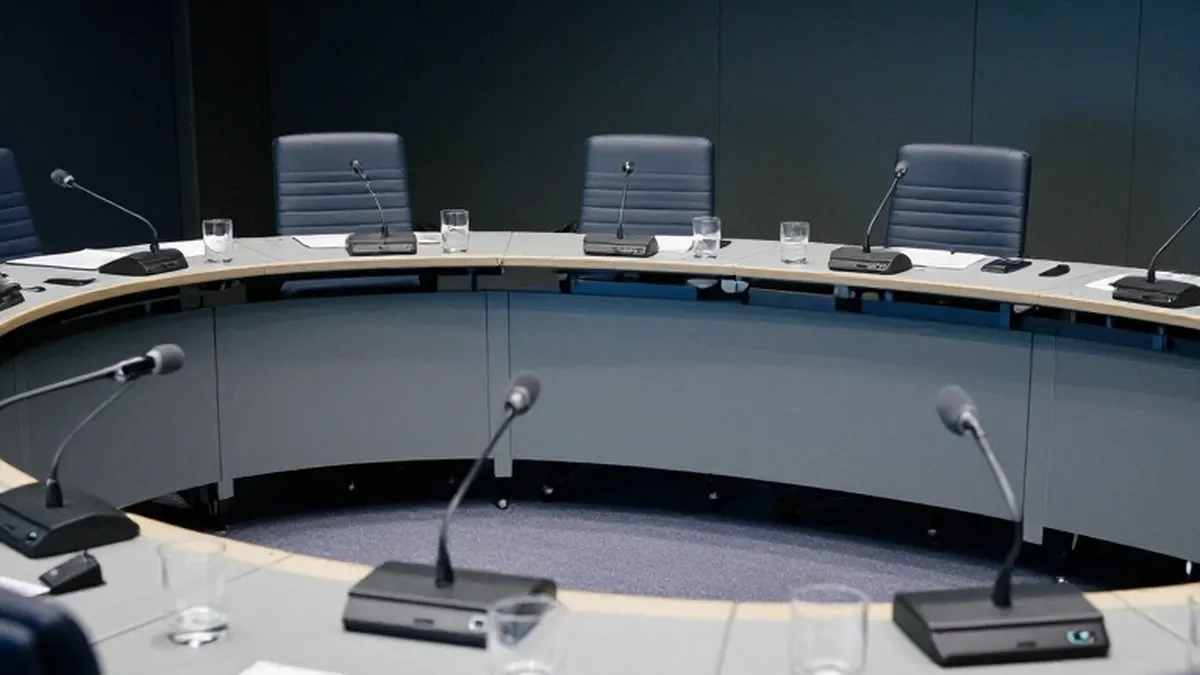
European Union leaders were unable to resolve a significant deadlock regarding the bloc's next long-term budget on Thursday. This failure leaves negotiators facing intense pressure to finalize the spending plan before the end of the year, a deadline that is becoming increasingly difficult to meet as the political landscape shifts ahead of a busy election cycle in 2027.
The controversy centers on the Multiannual Financial Framework, which outlines spending priorities and limits for the period from 2028 to 2034. Passing this framework requires unanimous agreement from all 27 member states, as well as a majority vote from members of the European Parliament. Representatives from member states convened on Wednesday and Thursday to debate the latest proposal from European Council President António Costa.
Costa’s proposal values the spending plan at 1.58 trillion euros, equivalent to approximately 1.73 trillion dollars. This figure represents a downward revision of roughly 10% from the original budget proposals. The timing of these negotiations is complicated by a challenging economic backdrop, including surging government borrowing costs, persistent inflation, and sluggish economic growth across much of the continent. Additionally, there are growing concerns about rising national deficits in several EU countries.
According to reports, the budget talks at the Brussels summit continued for 12 hours on Thursday. Tensions appeared high, with some participants reportedly walking out of the meeting as disagreements intensified over spending priorities and the level of aid provided to Ukraine. A spokesperson for the European Commission was not available to provide comments on the outcome of Thursday's discussions.
German Chancellor Friedrich Merz indicated on Thursday evening that the discussions had created new momentum toward reducing the overall size of the budget. He stated that leaders would reconvene in mid-December to resume negotiations. However, Merz emphasized that the EU consists of 27 member states, not 23 or 24, highlighting the need for broader consensus. In September, Merz joined the leaders of Denmark, the Netherlands, Austria, Finland, and Sweden in arguing that the original 2-trillion-euro proposal needed to be cut by several hundred billion euros.
In a joint letter to Costa and Irish Taoiseach Micheál Martin, these six leaders noted that their countries finance nearly 40% of all budget contributions. They argued that funding should be prioritized for defense spending, competitiveness, innovation, and efforts to manage irregular migration. Costa described his revised plans as realistic, noting that despite the 10.2% reduction in overall spending, the proposal still offers a 120% increase in competitiveness funding and a 232% rise in defense spending compared to the current budget.
Despite these adjustments, Costa acknowledged in a post-meeting statement that no agreement had been reached. He explained that while some member states requested further reductions, most opposed additional cuts, and some even proposed reversing previous reductions. This divergence in opinion reflects the broader challenge of balancing fiscal discipline with the need for strategic investment in a changing geopolitical environment.
Skepticism also exists within the European Parliament. Romanian MEP Siegfried Mureşan criticized the Council for proposing cuts while Parliament advocates for more investment. Mureşan argued that negotiations truly begin only when the Council reaches a firm position, and that prime ministers cannot dictate to the European Parliament to adopt a budget that is too small to equip Europe for the future.
The urgency of reaching an agreement is heightened by upcoming elections in key EU economies, including Spain, Poland, and Italy, over the next 12 months. France’s spring presidential election is particularly significant, with incumbent President Emmanuel Macron noting that he has limited time to influence EU spending decisions. Macron stated that after December 31, he would no longer be in a position, either politically or democratically, to reopen budget discussions, as the country would be entering a period too close to the presidential election.
France, the EU's second-largest economy after Germany, is currently tasked with drastically cutting its spending to bring its 5.1% national deficit closer to the EU guideline of 3%. The country is also dealing with months of mass protests, riots, and strikes driven by disputes over education funding and a cost-of-living crisis. These domestic pressures make the finalization of the EU budget a critical diplomatic and economic priority for the coming months.
Originally published by News Media House
More News · National news · Report a business · Got a Story?