Feds propose federal protection for two rare New Mexico fish species
The U.S. Fish and Wildlife Service has issued proposals to list the Rio Grande shiner and White Sands pupfish under the Endangered Species Act.
By Paula Delgado ·
Albuquerque. Federal officials issued proposals on Tuesday to place the Rio Grande shiner and the White Sands pupfish under the protection of the Endangered Species Act. Both species are small, endemic to New Mexico, and face habitat loss due to water usage and climate shifts. The Rio Grande shiner is proposed for endangered status, while the White Sands pupfish is proposed for threatened status.
The Rio Grande shiner is a silvery minnow measuring about 2.7 inches in length. It inhabits slow-moving water in the Rio Grande and Pecos River basins. The U.S. Fish and Wildlife Service noted that river channelization, water diversions, and groundwater pumping have reduced the fish's habitat. Historically, the Rio Grande flowed uninterrupted for more than 1,600 miles. Today, 36 dams fragment the river, leaving only five free-flowing sections longer than 62 miles. The agency stated that reservoirs behind these dams account for over 10 percent of the historical river habitat, causing substantial loss for the species.
Krista Kemppinen, a senior scientist at the Center for Biological Diversity, wrote in an email that drought and dwindling water resources threaten the shiner's survival. She noted that high-quality aquatic habitats are scarce, limiting the species' ability to expand its population. Officials also warned that shiner populations have been eradicated in other parts of the United States and may be gone entirely from the Mexican range. The proposal is open for public comment until January 25, 2027.
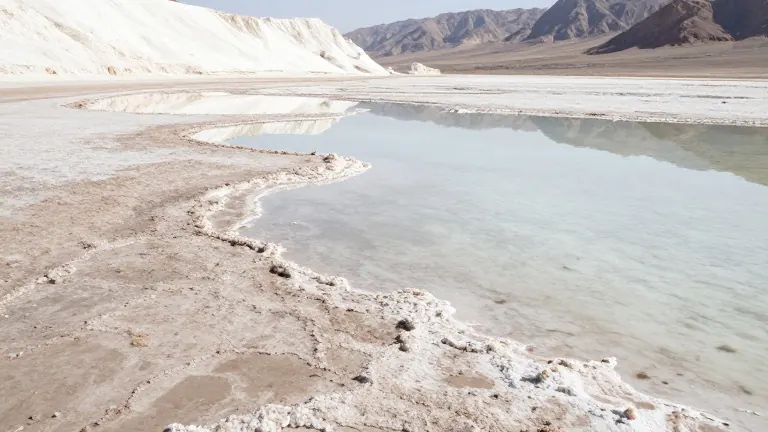
The White Sands pupfish is a tiny species found only in the Tularosa Basin in south-central New Mexico. This area was once part of Lake Otero during the Pleistocene epoch. The basin now features mineral deposits, salty ponds, and springs where the fish has lived for more than 12,000 years. The pupfish grows to about two inches and feeds on algae and small invertebrates. The National Park Service noted that the fish can adapt quickly if displaced within its microhabitat. However, the U.S. Fish and Wildlife Service described the species as especially vulnerable to extreme floods, rising stream temperatures, and invasive vegetation.
New Mexico's Department of Wildlife listed the White Sands pupfish as endangered in 1975 before downgrading it to threatened status. The department's 2026 biennial report identified nonnative vegetation, nonnative fish, and military activities as major threats. The region includes Holloman Air Force Base, White Sands Missile Range, and White Sands National Park. These three federal entities have maintained a joint conservation plan for the fish since 1994. The U.S. Fish and Wildlife Service is not designating a separate critical habitat because all essential areas for the species' conservation are on Department of War lands covered by an active integrated natural resources management plan. The 60-day public comment period for the pupfish listing ends on January 19, 2027.
Michael Robinson, a conservation advocate with the Center for Biological Diversity, said the fish's evolutionary tenacity is remarkable. He noted that there are only two natural populations of the White Sands pupfish, along with a handful of introduced populations. Climate change is predicted to shrink aquatic habitat, increase water temperatures and salinities, and cause floods that could strand the fish in lower-quality environments. Robinson said these listings come during two of the slowest periods for federal Endangered Species listings. Last year saw two finalized listings, while 2026 has seen three so far. The average number of listings over the past 14 years was about 29 per year.
The Rio Grande shiner proposal stems from a 2020 petition filed by WildEarth Guardians. In 2021, the agency found evidence to warrant further research. No decision was made by 2024. The Center for Biological Diversity joined WildEarth Guardians in filing a lawsuit in 2026 to force a finding. To avoid litigation, the agency agreed to meet the deadline and published its finding this month. If the proposed listings are approved, both species will receive federal protections designed to recover their populations. The agency will require an additional year to establish a critical habitat designation for the Rio Grande shiner.
The U.S. Fish and Wildlife Service published its finding this month after agreeing to a deadline set to avoid a lawsuit. The public comment period for the Rio Grande shiner proposal runs through January 25, 2027. The comment period for the White Sands pupfish proposal ends on January 19, 2027. The agency will use this input to finalize the listings and determine the scope of protections for both species.
More News · Albuquerque news · Report a business · Got a Story?