SpaceX Rocket Deploys 26 Satellites Before Booster Crashes in Gulf
Starship reached orbit successfully, but the lower stage failed to land, while the upper stage awaits a historic catch in Texas later today.
By Paula Delgado ·
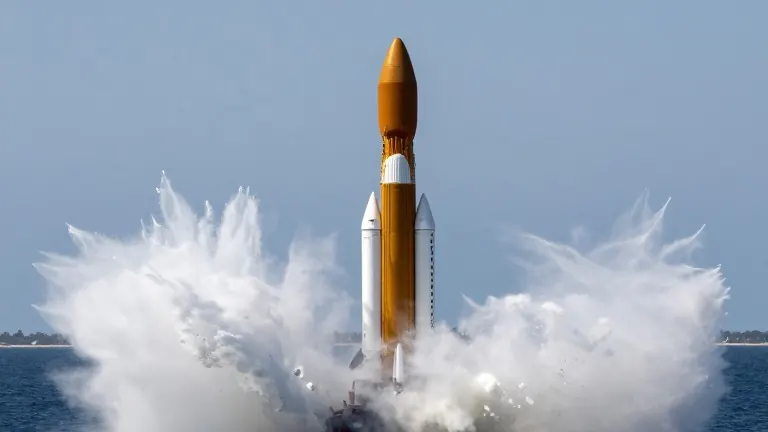
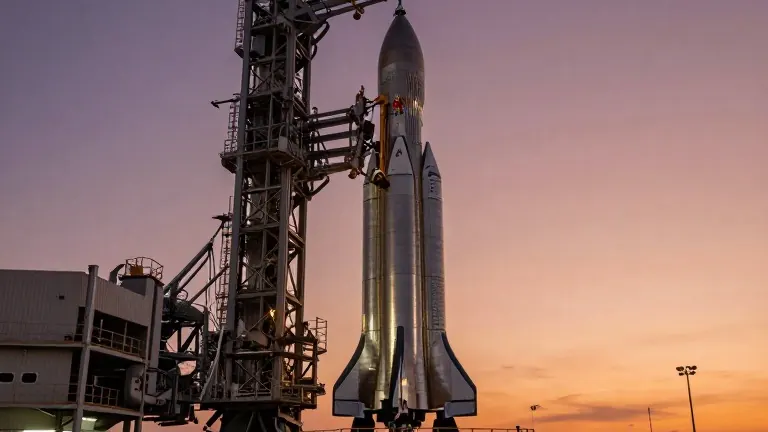
SpaceX deployed 26 new Starlink satellites into orbit yesterday evening after launching its Starship vehicle from Starbase, Texas. The spacecraft, the largest rocket ever built, successfully placed the internet nodes into position for the company's global network. However, the mission faced a setback during the return phase. The Super Heavy booster, the massive lower section of the rocket, attempted to return to Starbase but crashed into the Gulf of Mexico instead of landing on the launch pad.
The upper stage, known as the Starship spacecraft, remains in orbit around Earth. Engineers plan to guide this section back to the launch site later today. The objective is to test a new recovery method that involves the vehicle reentering the atmosphere, flying horizontally back to Starbase, and then turning vertical to hover near the launch tower. Two mechanical arms, called chopsticks, are positioned on the tower to grasp the descending rocket midair.
No rocket has ever been caught in this manner after returning from space. SpaceX aims to use this technique to make Starship rapidly reusable. The company plans to launch thousands of additional Starlink satellites and eventually deploy orbital data centers. These projects rely on the ability to catch both the booster and the upper stage, refuel them, and launch them again quickly. A successful catch of the Starship spacecraft today would validate that approach.
The flight comes as SpaceX prepares to retire its Falcon 9 rocket, its current workhorse for crewed missions. Falcon 9 is the only American vehicle currently capable of transporting astronauts to the International Space Station. Gwynne Shotwell, SpaceX president, explained the retirement strategy at the All-In Summit in September. She compared the Falcon 9 to a minivan, stating it is suitable for road trips but not for the six-month journey to Mars.
NASA faces a scheduling gap because it has secured Falcon 9 launches only through 2028, while its current plan keeps crewed operations on the station through 2030. Shotwell suggested NASA could turn to Boeing, a rival company, to fill the void. She noted that the government paid substantial sums for the Boeing capsule and should allow the company to fly it. However, the Boeing spacecraft has experienced technical issues and is not yet certified for human flights.
SpaceX is shifting its focus to its satellite internet business and potential space-based data centers, which promise higher revenue than its current government contracts. The company is now publicly traded, and shareholders are watching the Starship program closely. The outcome of today's landing attempt will influence how investors view the company's development of this high-cost, high-reward vehicle.
The Starship spacecraft is currently visible in orbit, and its trajectory is being monitored by SpaceX engineers. The planned reentry is expected in a few hours. If the mechanical catch succeeds, the vehicle will be secured in the tower. If it fails, the spacecraft may end up in the Gulf of Mexico or another area, similar to the fate of the booster yesterday.
The next step in the mission is the precise alignment of the Starship spacecraft with the launch tower. The mechanical arms are ready to deploy. Engineers will monitor the vehicle's speed and orientation during the final approach to determine if the catch can be executed safely.
More Tech · Albuquerque news · Report a business · Got a Story?